






Motorbiking the Ha Giang Loop in Northern Vietnam: The Ultimate Backpacker’s Guide

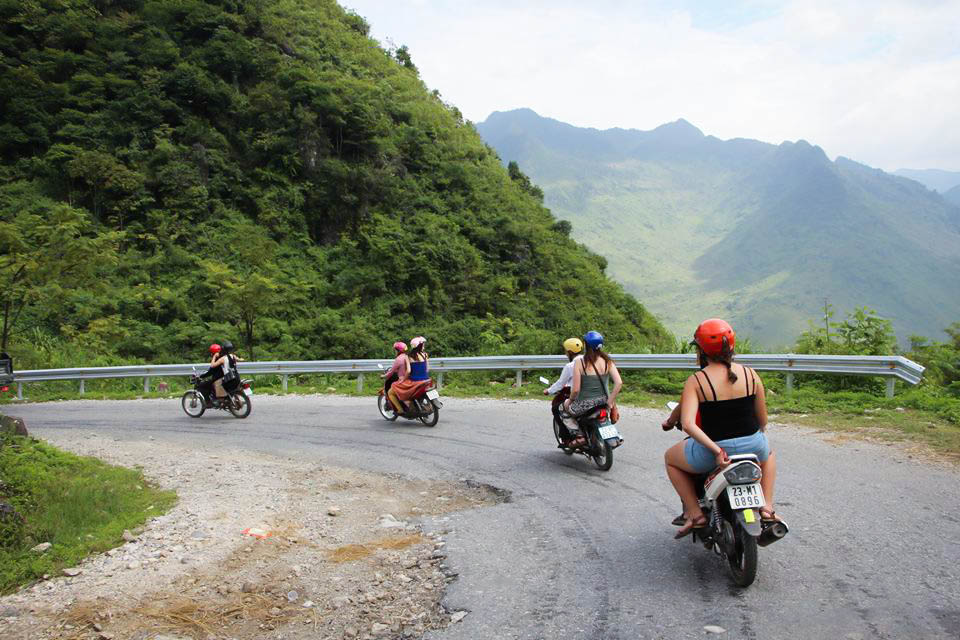
The Ha Giang Loop is hands down one of the most spectacular motorbike routes in Southeast Asia, and it has become a rite of passage for backpackers travelling through northern Vietnam. This 300-kilometre circuit takes you through dramatic mountain passes, traditional H’mong villages, terraced rice fields, and some of the most remote landscapes in the country.
I first heard about Ha Giang in a hostel in Hanoi, where literally everyone coming back from the north wouldn’t shut up about it. After spending five months travelling Southeast Asia, I can confirm the hype is real. But it is not without its challenges, and there are some important things you need to know before you set off.
What is the Ha Giang Loop?
The Ha Giang Loop is a motorbike circuit through the northernmost province of Vietnam, right up against the Chinese border. The route typically starts and ends in Ha Giang town, taking you through some of the most mountainous terrain in the country.
The most popular route covers around 300-350 kilometres and takes 3-4 days to complete. You will ride through winding mountain passes, stop at viewpoints that will make your Instagram followers weep with envy, and experience a side of Vietnam that feels a world away from the tourist trail.
Solo vs Guided Tours
Here is the big question: should you ride the loop independently or join an organised tour?
I have done it both ways. Going solo was incredibly rewarding and I loved the freedom, but I genuinely wish I had known more about the places I was riding through. When I joined a tour the second time, the guide pointed out things I had completely missed the first time around and explained the significance of different villages and customs.
Going Solo: The Pros
- Complete freedom to stop whenever and wherever you want
- Cheaper overall (bike rental, accommodation, and food probably £60-80 for the entire loop)
- More flexibility with your route and timing
- Feels like a proper adventure
Going Solo: The Cons
- You need to be a confident rider (this is not the place to be learning)
- Navigation can be tricky, though most people now use Maps.me or Google Maps offline
- If something goes wrong (breakdown, accident, getting lost), you are on your own
- You miss out on the knowledge of a local guide about the best photo spots, culture, and hidden gems
Joining a Tour: The Pros
- Experienced guide who knows the roads inside out
- Support vehicle follows the group (takes your bag and is there if you break down)
- No stress about navigation or finding accommodation
- Better insights into local culture and history
- Safer, especially if you are not a confident rider
- Usually includes homestays with local families, which is a more authentic experience
- All logistics sorted (permits, bike maintenance, accommodation)
Joining a Tour: The Cons
- More expensive (tours typically range from £80-150 for 3-4 days)
- Less flexibility about stops and timing
- You are riding in a group, which might not be your style
If you are an experienced rider and want maximum adventure, go solo. If you are less confident on a bike, want a more social experience, or prefer having support in case things go wrong, a tour makes sense. There is no wrong answer here, it depends on your priorities and riding ability.
Best Time to Go
Timing is everything with the Ha Giang Loop. I made the mistake of going in July during monsoon season, and while the landscapes were lush and green, the rain made the roads absolutely treacherous. Several sections were washed out, and I spent more time pushing my bike through mud than actually riding it.
September to November is peak season for good reason. The weather is dry, temperatures are comfortable (15-25°C), and the rice terraces are golden and ready for harvest. The downside? Everyone else has the same idea, so hostels fill up quickly and the roads can feel a bit crowded.
December to February offers clear skies and stunning mountain views, but it gets properly cold up in the mountains. I am talking 5-10°C in the mornings, with occasional frost. Pack warm layers if you go during this period.
March to May sees the rice terraces being planted, turning the valleys bright green. Weather is generally good, though it can be hazy.
June to August is monsoon season. The scenery is incredible, but landslides are common, roads can be dangerous, and some guesthouses close. Only consider this if you are an experienced rider and comfortable with unpredictable conditions.
Getting to Ha Giang
Most backpackers start from Hanoi. You have got a few options:
Night Bus: The cheapest option at around 200,000-300,000 VND (£6-9). Buses leave Hanoi around 9-10pm and arrive in Ha Giang at 5-6am. It is not the most comfortable journey, but it saves you a night’s accommodation. Book through your hostel or online.
Day Bus: Leaves Hanoi in the morning and arrives in Ha Giang by early afternoon, giving you time to sort out your bike rental and permits. Costs about the same as the night bus but you will need to pay for an extra night’s accommodation.
Motorbike from Hanoi: Some experienced riders choose to ride their own bike from Hanoi (about 300km), which takes a full day. This gives you more flexibility but adds significant distance and time to your trip.
The Permit Situation
Here is something that catches a lot of backpackers off guard: you need a permit to ride the Ha Giang Loop. The area is close to the Chinese border, so Vietnam requires foreigners to register.
Your hostel or bike rental shop in Ha Giang town will sort this out for you. They will need your passport for a few hours and charge around 10,000-20,000 VND (30-60p). You will get a paper permit that you need to keep with you throughout the loop.
There are police checkpoints along the route where they will check your permit, so do not skip this step. I saw several travellers get turned back at the first checkpoint because they thought they could wing it without the paperwork.
Choosing Your Bike
This is crucial. The Ha Giang Loop is not the place to learn how to ride a motorbike, and the type of bike you choose will massively impact your experience.
Semi-Automatic Bikes (Honda Blade, Wave, etc.): Most backpackers rent these. They cost 120,000-150,000 VND per day (£4-5) and are fine for the main roads. However, they struggle on steep inclines and have less control on loose gravel or wet roads.
Manual Bikes (Honda Win, Yamaha): Better for the mountains and give you more control on tricky sections. Cost about 150,000-200,000 VND per day (£5-6). Only choose these if you are comfortable with manual transmission.
Proper Trail Bikes (Honda XR, Yamaha DT): The best option if you can ride them. More expensive at 250,000-350,000 VND per day (£7-10), but they handle the terrain brilliantly and are much safer on difficult sections.
I did the loop on a semi-automatic Honda Blade the first time. It was adequate, but there were definitely moments on steep climbs where I wished I had something with more power. When I went back the following year on a Honda XR, the difference was night and day.
The Route: Day by Day Breakdown
Most people follow a similar route, though you can tweak it based on how much time you have and what you want to see.
Day 1: Ha Giang to Yen Minh (130km, 4-5 hours)
The first day eases you in gently. You will leave Ha Giang town and start climbing into the mountains. The roads are decent, though you will encounter your first steep passes.
Stop at the Quan Ba Heaven Gate viewpoint for your first proper taste of the dramatic karst landscape. On a clear day, you can see the famous ‘Fairy Bosom’ twin mountains.
Continue through Tam Son and on to Yen Minh. This is a small town with several guesthouses catering to loop riders. Nothing fancy, but clean beds and hot showers. Expect to pay 100,000-150,000 VND (£3-4.50) for a basic room.
Day 2: Yen Minh to Dong Van (90km, 4-5 hours)
This is where things get spectacular. You will ride through increasingly dramatic mountain scenery, passing through tiny H’mong villages where locals still wear traditional dress.
The highlight is the Lung Cu Flag Tower, the northernmost point of Vietnam. It is worth the detour up the winding road to the top. Standing there with China literally in view on the other side of the valley is a pretty surreal moment.
Dong Van itself is a charming old town with a lovely market and several decent restaurants. The old quarter has preserved French colonial architecture that is worth wandering around. Accommodation costs about the same as Yen Minh.
Day 3: Dong Van to Meo Vac (90km, 3-4 hours)
Many people consider this the best day of riding. The Ma Pi Leng Pass is the centrepiece, a jaw-dropping stretch of road carved into the mountainside with sheer drops on one side and the Nho Que River snaking through the valley thousands of feet below.
Take your time through this section. There are plenty of viewpoints where you will want to stop for photos. The road itself is good quality, but there are some seriously tight hairpin bends that require your full attention.
Meo Vac is smaller than Dong Van but has several guesthouses. If you are making good time, some riders push on to Mau Due, but there is something to be said for staying in Meo Vac and taking a sunset walk through town.
Day 4: Meo Vac to Ha Giang (180km, 6-7 hours)
The final day is the longest, and by this point, your bum will definitely be feeling it. The roads are generally good, though there are still some mountain passes to navigate.
You will pass through Mau Due (good place for breakfast if you did not stay there) and then start the long ride back towards Ha Giang. The scenery remains stunning, though by the afternoon, you will probably be ready to finish.
Most people arrive back in Ha Giang in the late afternoon, return their bikes, and either crash at a hostel or catch the night bus back to Hanoi.
Safety Tips and What to Watch Out For
The Ha Giang Loop is genuinely dangerous if you are not prepared. I saw several serious accidents during my time there, and every hostel has stories of backpackers who ended up in hospital. Make sure you are covered in your travel insurance.
Be honest about your riding ability. If you have only ridden a scooter around flat islands in Thailand, the Ha Giang Loop is a massive step up. The mountain passes are steep, roads can be slippery, and there are sheer drops with no barriers.
Wear proper protection. At minimum, a good helmet (not the flimsy one the rental shop gives you), long trousers, closed shoes, and ideally a jacket. I wore shorts the first time like an idiot and still have the scars from a minor spill.
Take it slow. The locals absolutely fly around these roads, but they have been doing it their whole lives. There is no shame in going slowly, especially on the tight hairpin bends.
Watch for loose gravel and livestock. Gravel accumulates on the inside of corners and causes many accidents. Also, cows, water buffalo, chickens, and dogs wander onto the roads constantly. Stay alert.
Start early each day. Roads are quieter in the mornings, the light is better for photos, and you will avoid riding in the dark. Sunset happens quickly in the mountains.
Check your brakes every morning. Literally just give them a test before you set off. Many rental bikes are not in great condition, and you need those brakes working on mountain descents.
Bring a basic first aid kit and know where the hospitals are in Dong Van and Meo Vac. Phone signal is patchy throughout the loop, so download offline maps before you go.
What to Pack
You will be living out of whatever fits on your motorbike for 3-4 days, so pack light.
Essentials:
- Backpack (preferably weatherproof or with a rain cover)
- Long trousers and a warm layer (it gets cold in the mountains, especially mornings and evenings)
- Sunscreen and sunglasses (the sun is intense at altitude)
- Basic toiletries
- First Aid kit
- Phone charger and power bank
- Toilet paper (many stops have squat toilets with no paper)
- Small amount of cash (many places do not take cards)
- Prescription medications if needed
- Water bottle
Useful extras:
- Light rain jacket (even in dry season, weather can change quickly)
- Buff or scarf for dust on the roads
- Wet wipes for freshening up
- Snacks for the road
Do not overpack. Most hostels along the route have laundry service, and you can buy anything you have forgotten in the towns.
Food and Accommodation Along the Route
Accommodation is basic but adequate. Expect simple guesthouses with clean beds, hot showers (usually), and WiFi (sometimes). During peak season, places fill up quickly, so it is worth calling ahead or arriving by mid-afternoon to secure a room.
Food is excellent and cheap. Pho (noodle soup) is available everywhere and perfect for breakfast. You will also find fried rice, banh mi (Vietnamese baguettes), and various meat and vegetable dishes. If you are vegetarian, ‘khong thit’ means ‘no meat’ in Vietnamese.
Meals typically cost 30,000-60,000 VND (£1-2). Beer is cheap, and most guesthouses have restaurants where travellers gather in the evenings to swap stories from the day’s ride.
How Much Does It Cost?
If you are going solo, budget roughly:
- Bike rental: 120,000-200,000 VND per day (£4-6)
- Petrol: around 100,000 VND total for the loop (£3)
- Accommodation: 100,000-150,000 VND per night (£3-4.50)
- Food: 150,000-200,000 VND per day (£4.50-6)
- Permit: 10,000-20,000 VND (30-60p)
Total for 4 days: roughly £60-80
Tours range from around £80-150 depending on what is included. Higher-end tours include better bikes, nicer accommodation, and more meals included.
Is the Ha Giang Loop Worth It?
Absolutely. Despite the challenges, the Ha Giang Loop was genuinely one of the highlights of my time in Southeast Asia. The scenery is on another level, the riding is exhilarating, and there is something deeply satisfying about completing it.
Yes, it can be dangerous if you are not careful. Yes, parts of it are physically demanding. And yes, you will probably be sore for days afterwards. But if you are a backpacker looking for adventure in Vietnam, this is about as good as it gets.
Whether you choose to go solo or join a tour, just make sure you are realistic about your abilities, take the necessary safety precautions, and give yourself enough time to actually enjoy the experience rather than rushing through it.
The mountains of northern Vietnam are calling. Answer carefully, ride safely, and prepare for one of the best experiences of your backpacking trip.



By adding us a preferred source you'll see Backpacker Advice more often in your Google searches.