Australia
The Best Australia Travel Itineraries for Backpackers
Sydney to Cairns (or vice versa) is the bit everybody does. You can easily add Melbourne and the Great Ocean Road to this itinerary as well…

Australia is the kind of place that every backpacker dreams about. The kind of vast landscapes, wild coasts, and iconic cities that make even a simple road trip unforgettable. But let’s be real: figuring out how to fit it all into one trip can feel overwhelming. Whether you’re starting in Sydney, Melbourne, or Cairns, this guide breaks it down into manageable routes so you’ll get the best of Australia without feeling like you’re running from one end of the country to the other. Let me show you a balanced, flexible itinerary based on real backpacker experiences, so you can soak in the highlights and still have time for a lazy beach day or sudden detour.
Don’t forget to check out our 26 Things You Should Do On Your Trip To Australia while planning your itinerary.
Remember these are only suggested Australia travel itineraries. There is no right or wrong route and they can be shortened, extended or altered as you wish. The itineraries below aim to provide the most cost effective routes whilst incorporating as many top destinations as possible. Don’t be inhibited to any itinerary. Get off the beaten tracks and visit lesser know places – you may even find some secret havens.
How Much Does It Cost To Backpack Australia?
If you’re planning a backpacking trip to Australia, one of the first questions you’ll probably have is: how much is it going to cost me? While your exact expenses will depend on your travel style, season, and itinerary, it’s useful to know the average prices so you can budget with confidence. Below is a breakdown of common costs you’re likely to encounter while travelling in Australia as a backpacker.
| Average Cost (AUD) | |
|---|---|
| Hostel per night | $30 – $50 |
| 30 day bus pass | $300 – $500 |
| Daily food budget | $20 – $35 |
| National park entry | $0 – $30 |
| Campervan rental (per day) | $50 – $120 |
These figures are 2025 average prices, so you may find deals that are cheaper, or end up splurging a little more in certain destinations. The key to keeping your budget on track is balancing the pricier days (like when you rent a campervan or take a big tour) with low-cost days spent exploring free attractions or cooking your own meals. With a realistic budget in mind, you’ll be able to enjoy Australia’s highlights without the stress of running out of funds halfway through your trip.
Australia Itinerary For Those On A Small Budget (3-6 Weeks)
The East Coast: Sydney to Cairns (or vice versa) is the bit everybody does. You can easily add Melbourne and the Great Ocean Road to this itinerary as well.
It is by far the easiest and cheapest part of Australia to see and of course it also home to some of its best destinations.
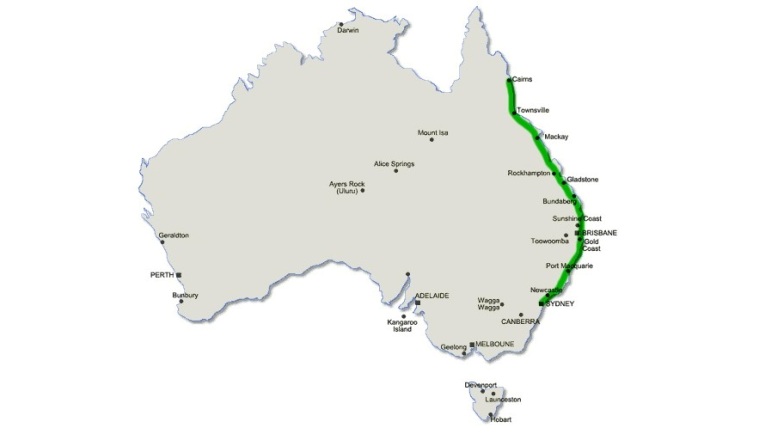
Popular Australia East Coast Route & Destinations
Sydney – The Blue Mountains – Hunter Valley – Port Stephens (5-7 days)
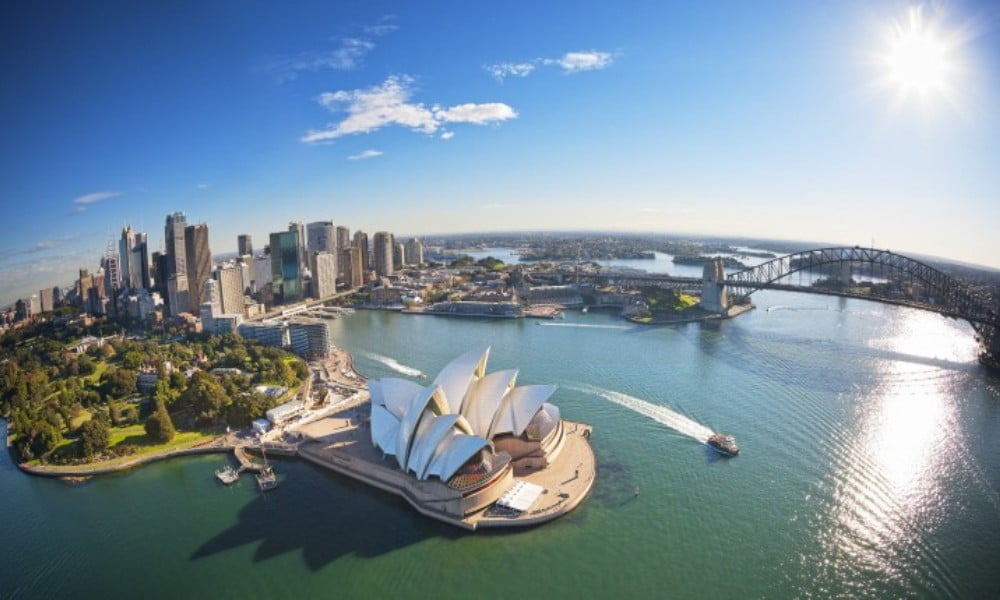
Start in Sydney and soak up the beautiful harbour. Be sure to do the Bondi to Coogee beach coastal walk while in Sydney too. Three great day trips (The Blue Mountains, Hunter Valley & Port Stephens) are all available from Sydney, although you may want to visit them all for longer.
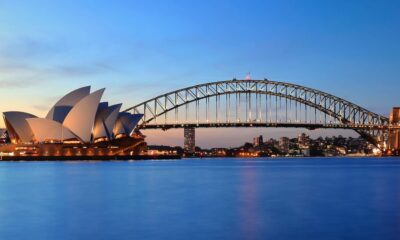
Highlights: Sydney Opera House & Harbour Bridge, Bondi to Coogee walk, Blue Mountains hiking & Three Sisters lookout, Hunter Valley wine tours, Port Stephens sandboarding & dolphin cruises.
Travel times: Sydney to Blue Mountains – 2 hrs by train or 1.5 hrs by car; Sydney to Hunter Valley – 2.5 hrs by car; Sydney to Port Stephens – 2.5–3 hrs by car.
Best Sydney Hostel Recommendations for Under $60 AUD (£30) Per Night
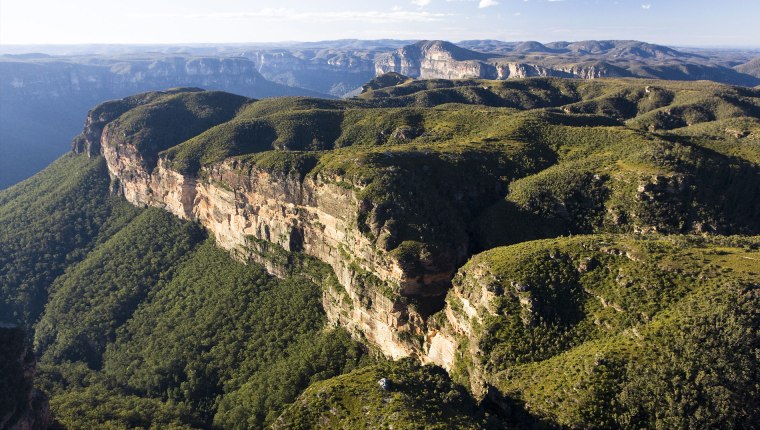 There are many stunning views in the Blue Mountains National Park west of Sydney.
Port Macquarie – Coffs Harbour – Yamba (optional 3-6 days)
North of Sydney lie some of the best and quintessential surf towns in Australia, and plenty of great bush walking tracks too – why not check them out!
Highlights: Port Macquarie coastal walk, Koala Hospital, Hat Head National Park, Coffs Harbour Big Banana, Yamba surf breaks.
Travel times: Sydney to Port Macquarie – 4.5 hrs by car; Port Macquarie to Coffs Harbour – 2 hrs by car; Coffs Harbour to Yamba – 2.5 hrs by car.
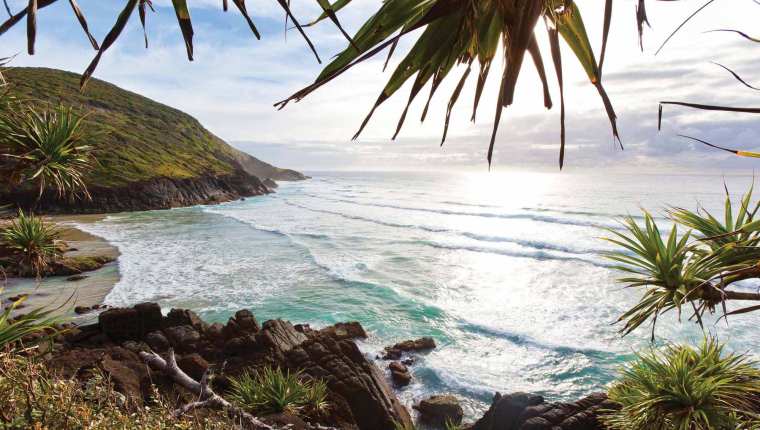 Hat Head National Park – between Port Macquarie and Coffs Harbour
Byron Bay – Gold Coast – Brisbane (5-7 days)
Even further north is Byron Bay – the king of all surf towns – with its alternative lifestyle and laidback vibe – a must visit. After Byron, head up to Queensland and see what you make of The Gold Coast – it is a real love it or hate it place.
Highlights: Byron Bay lighthouse sunrise, surfing The Pass, Gold Coast theme parks, Burleigh Heads National Park, Brisbane’s South Bank.
Travel times: Yamba to Byron Bay – 2 hrs by car; Byron Bay to Gold Coast – 1 hr by car; Gold Coast to Brisbane – 1 hr by car/train.
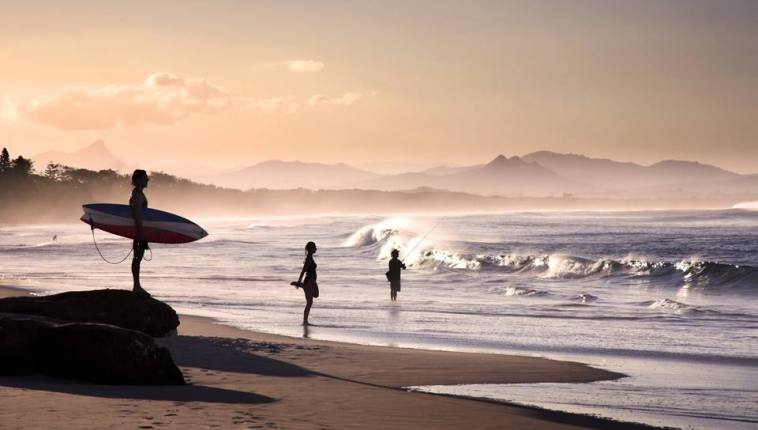 Byron Bay
Noosa – Fraser Island – Hervey Bay (5 – 7 days)
Past Brisbane, you’ll reach the Sunshine Coast which really lives up to its name. Noosa is arguably the best place to visit along this beautiful stretch of coastline.
Then a must for every backpacker to Australia, a visit to Fraser Island on a 4×4 tag along tour. Be sure to visit Lake McKenzie, Champagne Pools, Eli Creek, and Maheno shipwreck.
After visit Hervey Bay. At the right time of year, it is the best place in the world to see the Humpback Whale migration up close.
Highlights: Noosa National Park walks, Fraser Island 4×4 adventures, Lake McKenzie swimming, Champagne Pools, whale watching in Hervey Bay.
Travel times: Brisbane to Noosa – 2 hrs by car; Noosa to Hervey Bay (via Rainbow Beach/Fraser Island tour connection) – 3.5–4 hrs by car.
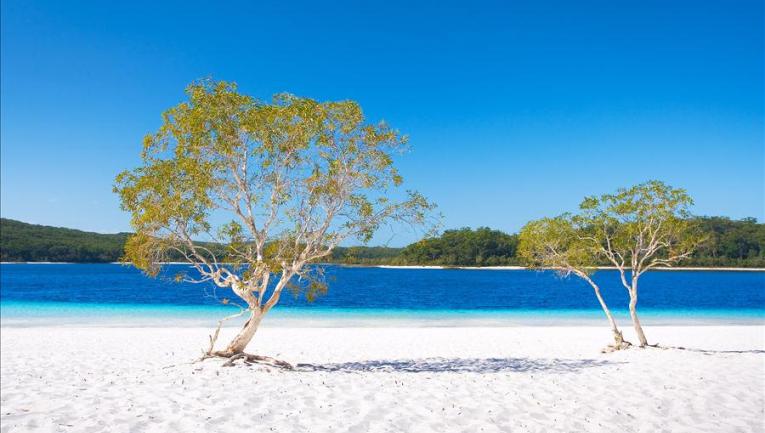 Lake McKenzie, Fraser Island
Agnes Water – Lady Musgrave & Lady Elliot Islands (optional 2-3 days)
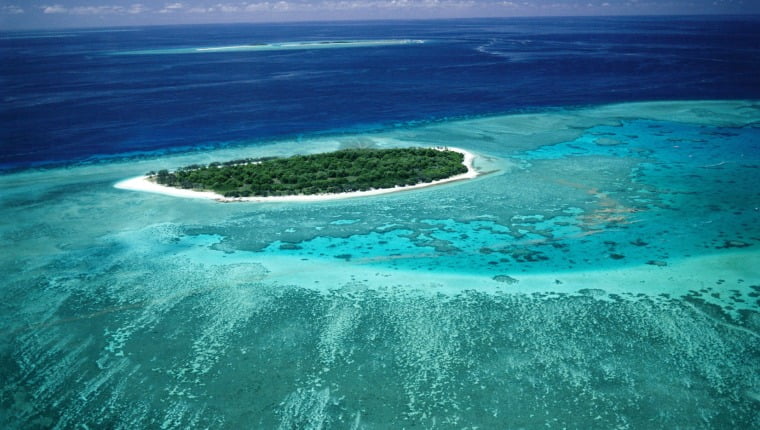
Agnes Water is a cool little town you may want to briefly visit. It’s the cheapest place to learn to surf in Australia. It also marks the start of the Great Barrier Reef. If you can afford to, check out the stunning Lady Musgrave & Lady Elliot Islands.
Highlights: Budget surf lessons, relaxed beaches, snorkelling and diving on the southern Great Barrier Reef.
Travel times: Hervey Bay to Agnes Water – 4 hrs by car.
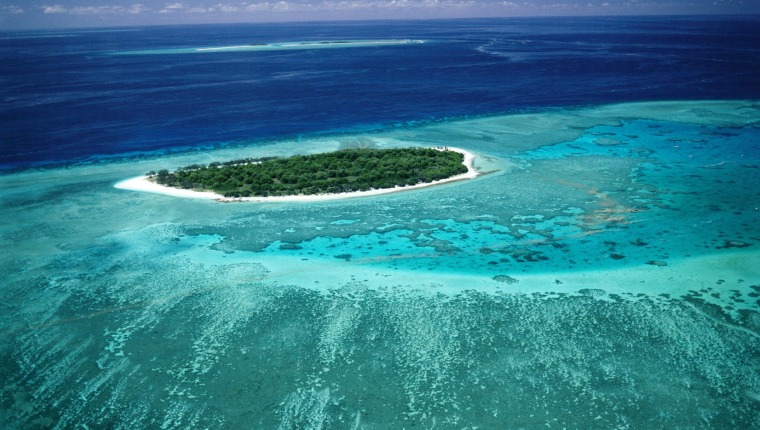 Lady Musgrave Island
Airlie Beach – The Whitsundays (3-4 days)
Make your way further North into the tropics and stop at The Whitsundays – the crown jewel of the East Coast, if not Australia, if not the World! If you go to one place in Australia, make sure it is here!
Highlights: Sailing through the Whitsundays, Whitehaven Beach, Hill Inlet lookout, snorkelling vibrant reefs.
Travel times: Agnes Water to Airlie Beach – 7 hrs by car or overnight bus.
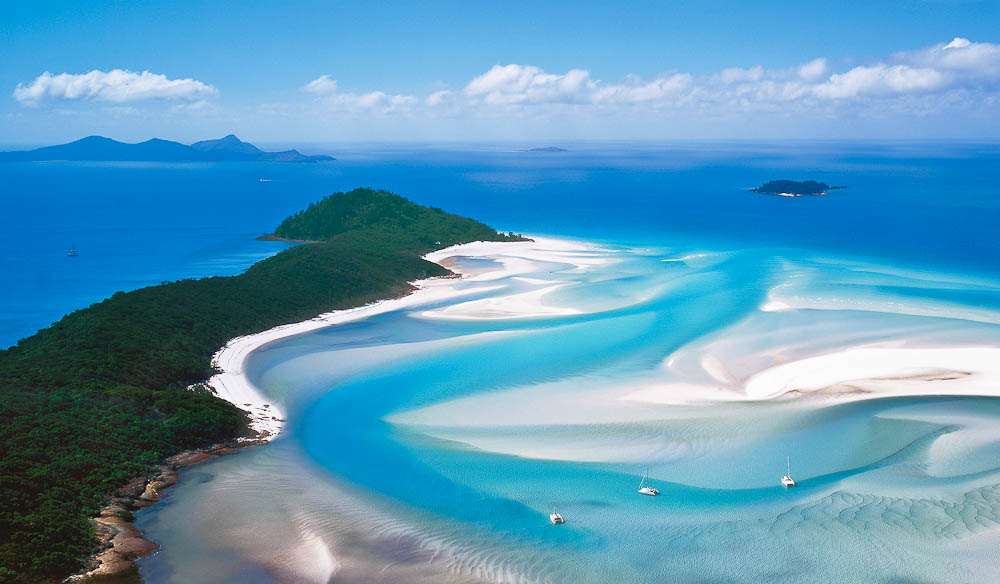 Whitehaven beach, The Whitsundays
Townsville – Magnetic Island – Mission Beach (optional 3-5 days)
Before going on to Cairns, hop over to Magnetic Island for some fascinating walks. The Fort Walk is one of the best places to spot wild koalas in Australia. Just South of Cairns is Mission Beach – the cheapest place in Oz to skydive, and also the best place to see the endangered Cassowary.
Highlights: Magnetic Island Fort Walk, wild koala spotting, snorkelling fringing reefs, Mission Beach skydiving, cassowary spotting.
Travel times: Airlie Beach to Townsville – 4 hrs by car; Townsville to Mission Beach – 3 hrs by car.
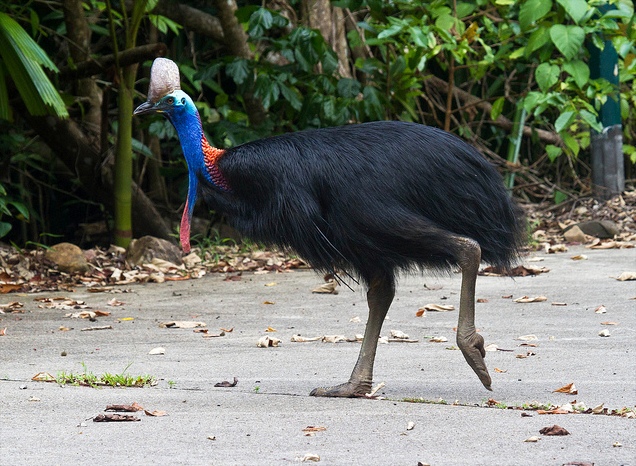 Cassowary
Cairns – Far North Queensland (5-7 days)
Finally reach Cairns – the backpacker and adrenaline capital of Australia. There is so much to do in and around Cairns, plus it’s your gateway to the Great Barrier Reef. You can take a day trip to Fitzroy Island or go on an extended multi-day trip to the outer reef on a liveaboard boat – you don’t need a scuba license, as intro dives are common.
Highlights: Great Barrier Reef diving and snorkelling, Fitzroy Island day trip, Daintree Rainforest, Cape Tribulation beaches, Skyrail to Kuranda.
Travel times: Mission Beach to Cairns – 2 hrs by car.
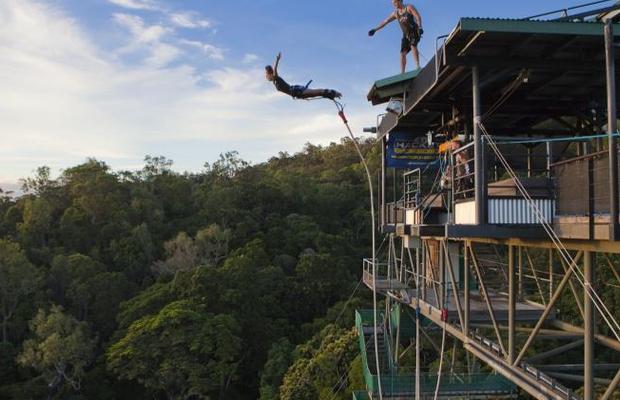 Bungee jumping in Cairns
Itinerary For Those Who Want Travel All of Australia (Approx. 3 Months)
If you want to do all of Australia this is the best and cheapest itinerary. You won’t even need to fly if you don’t want to.
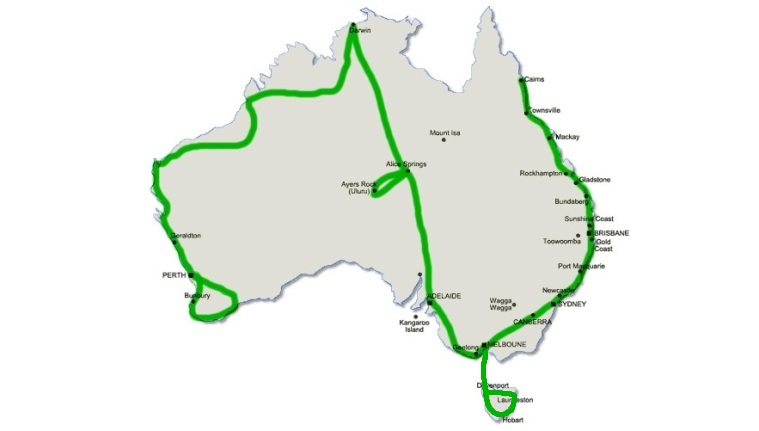
Popular Australia Travel Route & Destinations
You can start in either Perth or Cairns.
Perth – Rottnest Island (3-4 days)
If you start in Perth, Australia’s sunniest city, take a short ferry ride from the CBD to the must visit Rottnest Island. You can cycle round the whole island in a day, stopping off at some gorgeous beaches and hanging out with the world’s happiest creature, the Quokka, that’s native to the island.
Highlights: Perth city skyline, Kings Park, Swan River cruises, Rottnest Island beaches, Quokka spotting, cycling around Rottnest.
Travel times: Perth CBD to Rottnest Island – 25–45 min ferry ride.
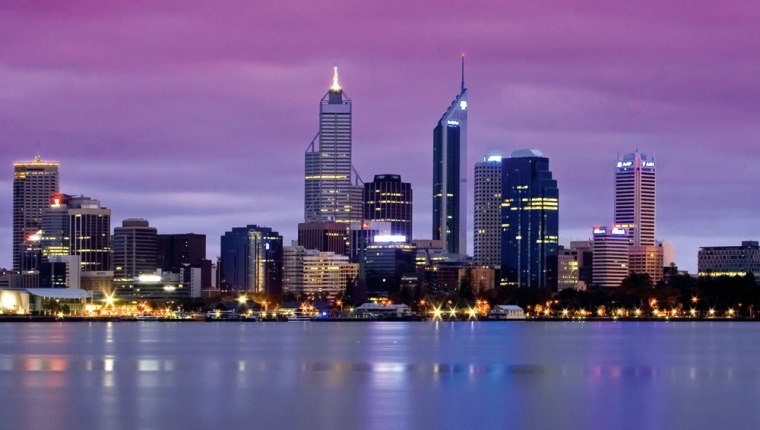 Perth’s skyline
Margaret River – Denmark – Albany – Esperance (optional 3-5 days)
From Perth you have the option to do a quick 3-5 day circuit of the South West which offers some of the best beaches in Australia. I have a more detailed itinerary here for this amazing, but less visited part of the country.
Highlights: Margaret River wineries and breweries, Denmark’s Greens Pool, Albany’s whaling history,
Travel times: Perth to Margaret River – 3 hrs by car; Margaret River to Denmark – 4 hrs by car; Denmark to Albany – 45 min by car; Albany to Esperance – 5 hrs by car.
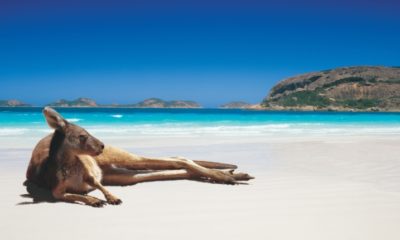
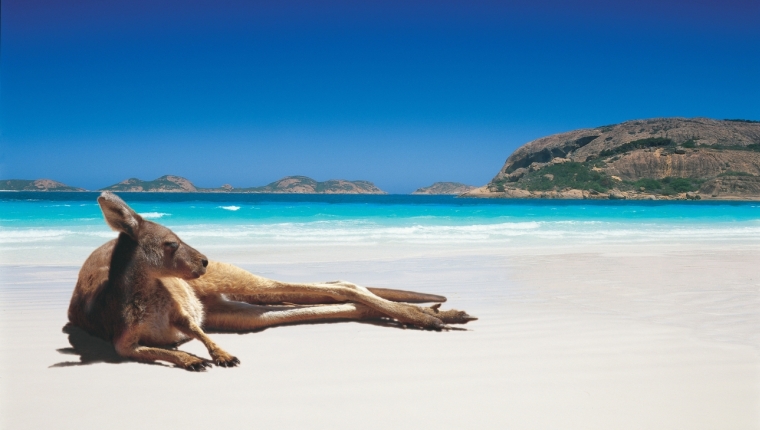 Kangaroos on the beach are a common sight at Lucky Bay, near Esperance
Perth – Kalbarri – Monkey Mia (2-3 days)
North of Perth are some great geological wonders – The Pinnacles and throughout Kalbarri National Park. Further North at Monkey Mia you can see wild dolphins up close and personal. You may even be lucky enough to hand feed them.
Highlights: The Pinnacles Desert, Kalbarri coastal cliffs, Nature’s Window, Monkey Mia dolphin feeding.
Travel times: Perth to Kalbarri – 6 hrs by car; Kalbarri to Monkey Mia – 4.5 hrs by car.
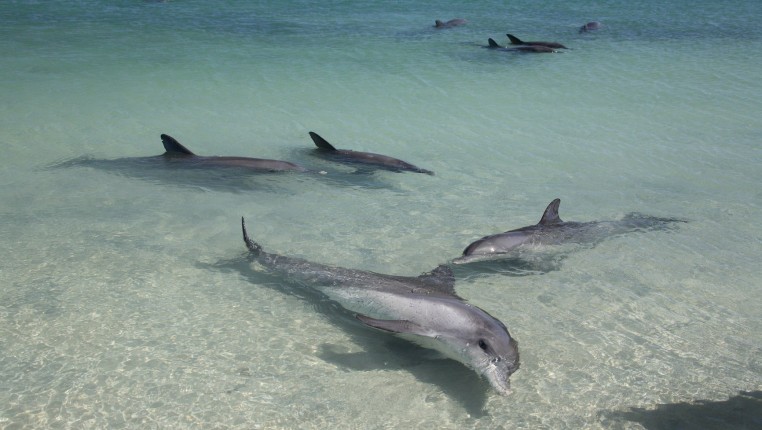 Dolphins at Monkey Mia
Coral Bay – Exmouth / Ningaloo Reef (3-4 days)
Head into more tropical climes and get into the water. Some argue Ningaloo Reef is better than the Great Barrier Reef – it certainly is if you want to swim with whale sharks.
Highlights: Snorkelling from the beach, manta ray encounters, whale shark swims (seasonal), Turquoise Bay, Cape Range National Park.
Travel times: Monkey Mia to Coral Bay – 6 hrs by car; Coral Bay to Exmouth – 1.5 hrs by car.
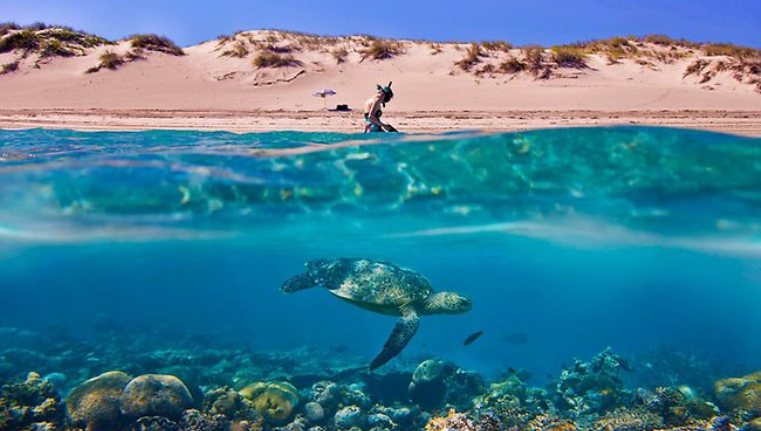 The bountiful reef is just steps from the beach
Karijini National Park – Broome (4-6 days)
Move away from the coast, into the outback interior and to Karijini National Park – one of my favourite places in all of Australia. Then get back to the coast up in Broome, where it gets real hot & sticky, and cool off at the beautiful Cable beach.
Highlights: Karijini’s gorges and swimming holes, Hancock Gorge, Broome’s Cable Beach sunsets, camel rides.
Travel times: Exmouth to Karijini National Park – 9 hrs by car; Karijini to Broome – 11 hrs by car.
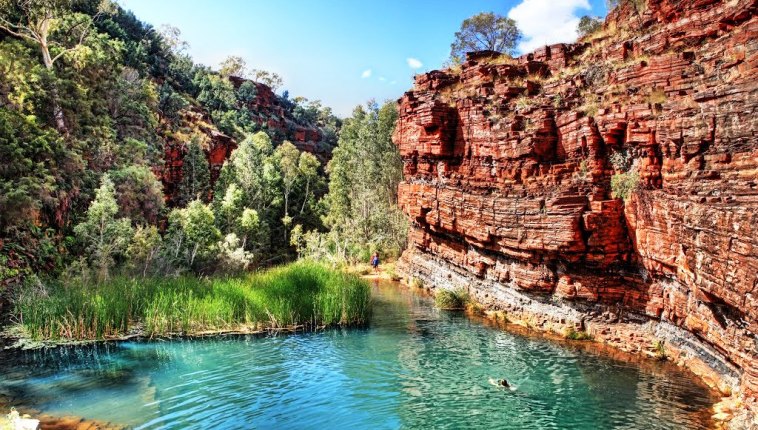 Karijini National Park
The Kimberley (optional 4-7 days)
Back to the outback and to the wildest part of Australia. I highly recommended you visit the Kimberley with an experienced guide.
Highlights: Gibb River Road, Bungle Bungles, Mitchell Falls, El Questro Wilderness Park.
Travel times: Broome to the Bungle Bungles (Purnululu National Park) – 10–12 hrs by car or included in guided tour.
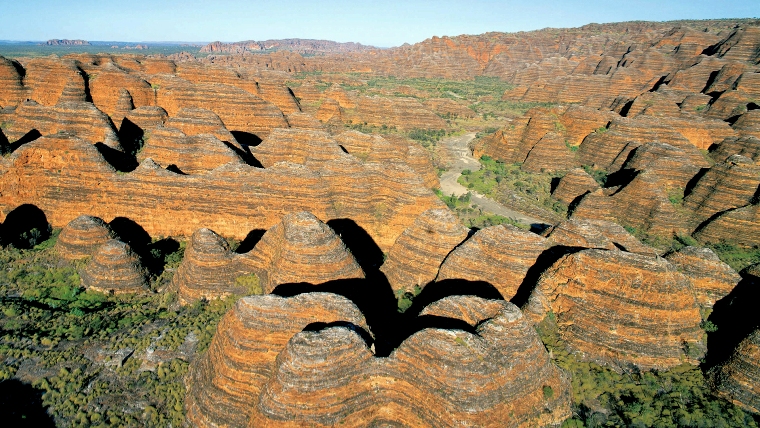 Bungle Bungles, in the East Kimberley
Darwin – Litchfield – Kakadu – Katherine (5-8 days)
Reach the Top End and its rugged, wild, “Crocodile Dundee” landscape. If you want to see wild crocodiles or learn more about aboriginal culture, this is the place to come.
Highlights: Litchfield’s Wangi Falls and magnetic termite mounds, Kakadu rock art, Yellow Water cruises, Katherine Gorge.
Travel times: Broome to Darwin – 18+ hrs by car or 2.5 hr flight; Darwin to Litchfield National Park – 1.5 hrs by car; Darwin to Kakadu – 3 hrs by car; Kakadu to Katherine – 3 hrs by car.
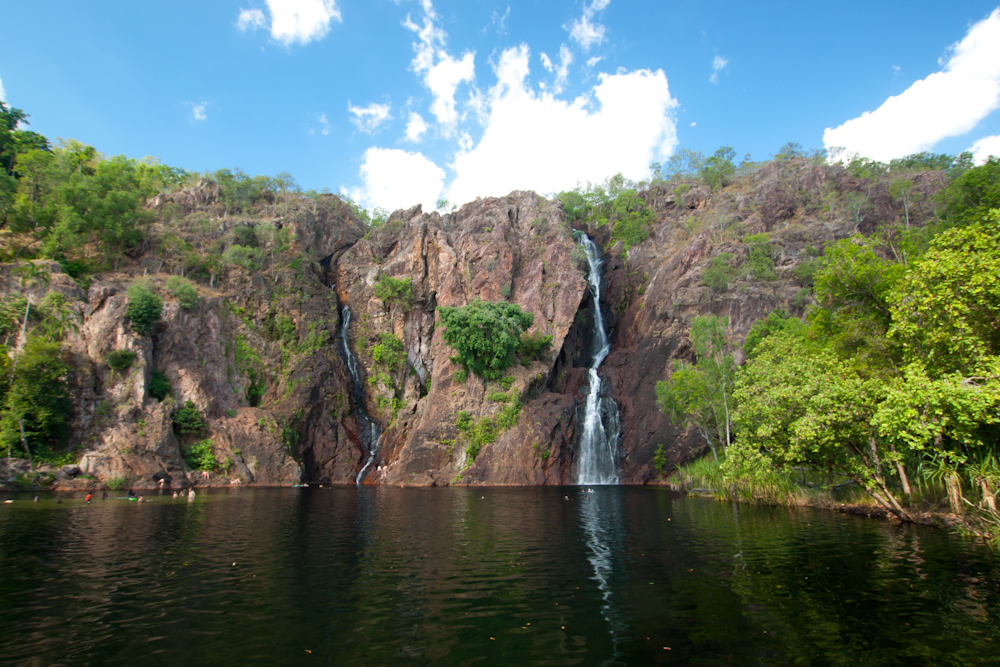 Wangi Falls, Litchfield National Park
Alice Springs – Uluru – The Red Centre (3-5 days)
Head South, again into the Outback to visit Uluru and Kings Canyon. The Red Centre is more than a big rock – it is a truly epic place! Most people choose to do a 3 day/2 night tour, encompassing all the sites in the region. If you still want to see more, why not take the epic Ghan train through the outback to or from Adelaide or Darwin.
Highlights: Uluru sunrise/sunset, Kata Tjuta walks, Kings Canyon Rim Walk, Aboriginal cultural experiences.
Travel times: Darwin to Alice Springs – 20 hrs by car or 2 hr flight; Alice Springs to Uluru – 4.5 hrs by car; Uluru to Kings Canyon – 3.5 hrs by car.
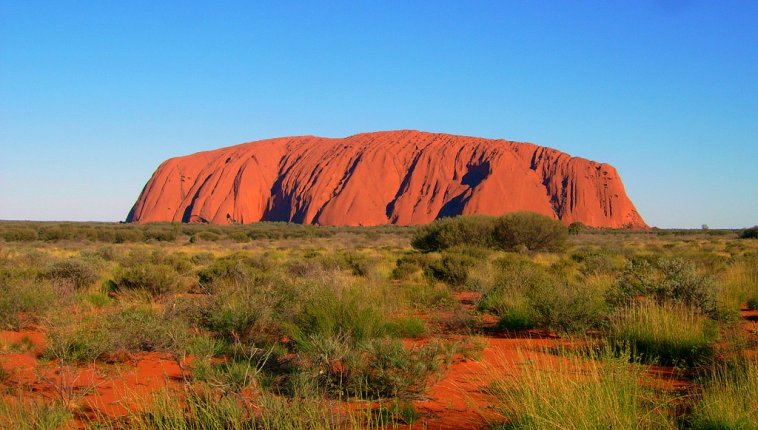 Uluru
Uluru
Adelaide – Great Ocean Road – Melbourne (7-10 days)
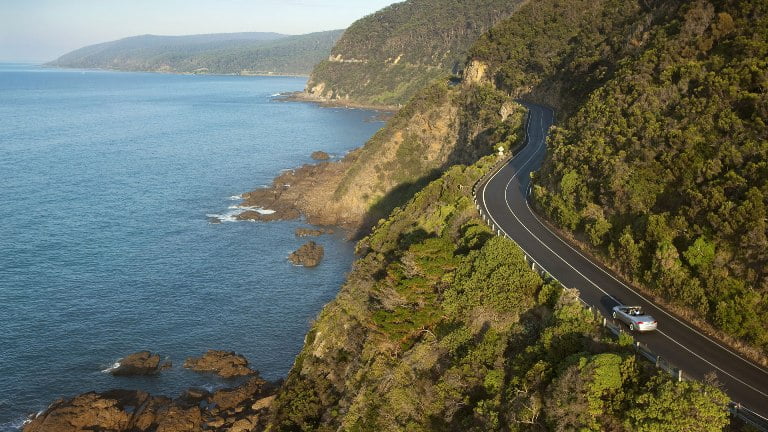
Get back to civilisation with a short stop in Adelaide, from where you can hire a car and take 2 to 4 days to visit Grampians National Park and drive along the stunning Great Ocean Road onto the cultured city of Melbourne.
Melbourne has lots of free activities such as lane-way street art, museums, the Botanic Gardens, and even a free tram in the CBD. Be sure to visit St Kilda for beaches and possibly penguins too.
Highlights: Adelaide Central Market, Grampians hikes, Twelve Apostles, Melbourne laneways, St Kilda penguins.
Travel times: Uluru to Adelaide – 16 hrs by car or 2 hr flight; Adelaide to Grampians – 5 hrs by car; Grampians to Great Ocean Road (Warrnambool) – 3 hrs by car; Warrnambool to Melbourne – 5 hrs by car.
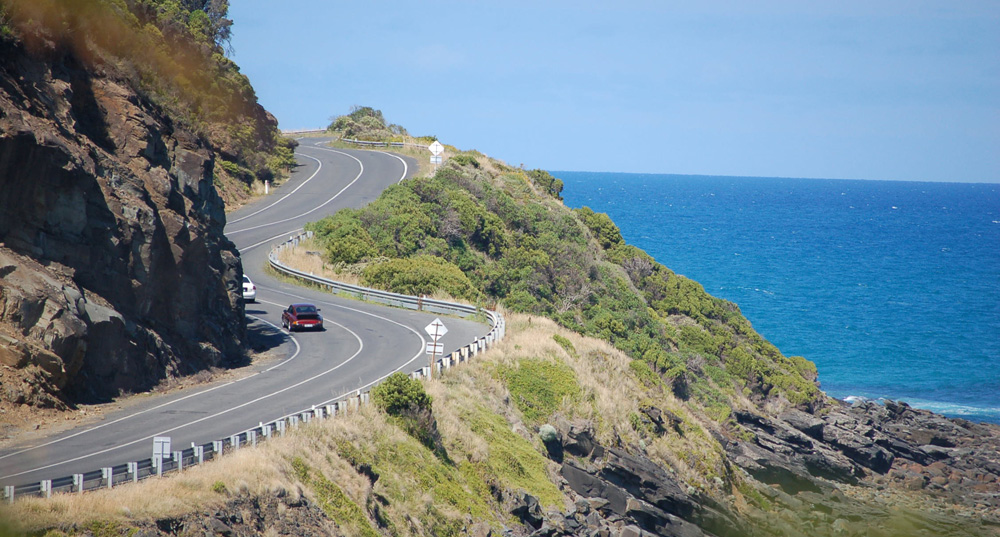 The Great Ocean Road
Tasmania (optional 5-8 days)
(Hobart – Wild West Coast – Cradle Mountain – Launceston – Bay of Fires – Wineglass Bay – Port Arthur – Hobart)
You can easily fly to Tasmania if you wish – home to abundant wildlife and some stunning beaches. A return flight from Melbourne to Hobart would be the cheapest and fastest option, but there is also a car ferry.
Highlights: Hobart’s Salamanca Market, Cradle Mountain hikes, Bay of Fires beaches, Freycinet National Park, Port Arthur historic site.
Travel times: Melbourne to Hobart – 1 hr 15 min flight or 10.5 hr ferry; Hobart to Cradle Mountain – 4.5 hrs by car; Cradle Mountain to Launceston – 2 hrs by car; Launceston to Bay of Fires – 2 hrs by car; Bay of Fires to Wineglass Bay – 3.5 hrs by car; Wineglass Bay to Port Arthur – 3.5 hrs by car.
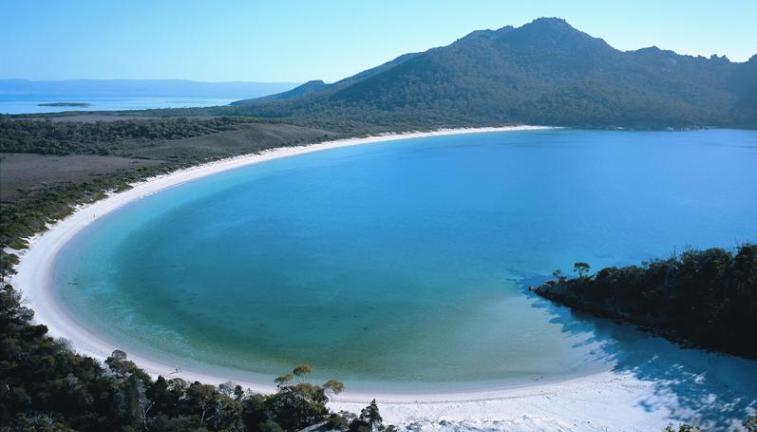 Wineglass Bay, Tasmania
Canberra – Jervis Bay (optional 2-4 days)
Before heading to Sydney, stop off in the nation’s capital (Canberra), or chill on the world’s whitest sand beach (Hyams beach, Jervis Bay) if you wish.
Highlights: Australian War Memorial, Parliament House, Hyams Beach, Jervis Bay dolphin cruises.
Travel times: Melbourne to Canberra – 7 hrs by car or 1 hr flight; Canberra to Jervis Bay – 2.5 hrs by car.
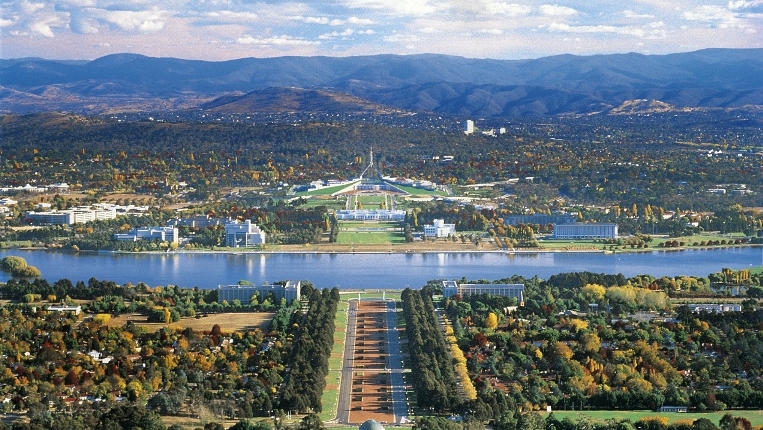
Canberra – the capital of Australia.
Sydney – Cairns (3-6 weeks)
Finally head up the famous East Coast, stopping off at the many beautiful destinations along the way (see the Small Budget itinerary above). Finally reaching the party town of Cairns for your goodbye to this magnificent country.
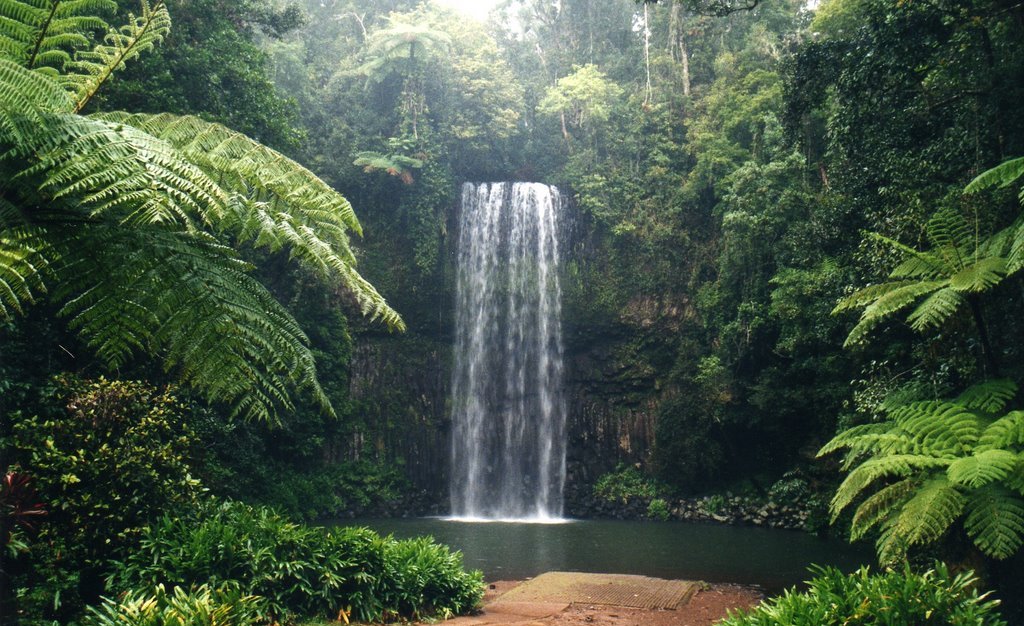
Millaa Millaa Falls, Queensland – just outside Cairns.
Itinerary For Those In Between (5-10 Weeks)
If you don’t have enough money or time to do it all, or want to see the outback as well as the beaches this may be the best route for you.
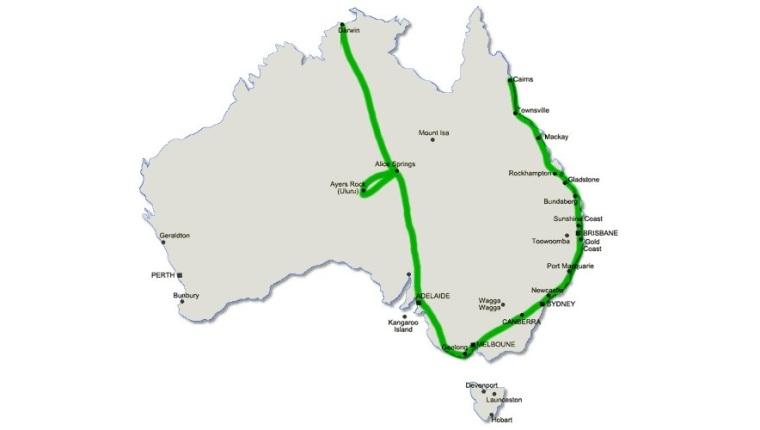
If you want to do this route be sure to shop around for the cheapest flight.
Don’t forget to check out our 26 Things You Should Do On Your Trip To Australia while planning your itinerary.
If you are interested in more Australian itineraries, check out G-Adventures. Tour companies like this are great as they organise everything for you and encompass the best destinations. You don’t need to think or worry about anything – all you have to do is turn up and everything is taken care of. If you have concerns about travelling alone then a tour like is also a great idea, as you’ll be travelling together with a group of like-minded people.
When To Go Where In Australia
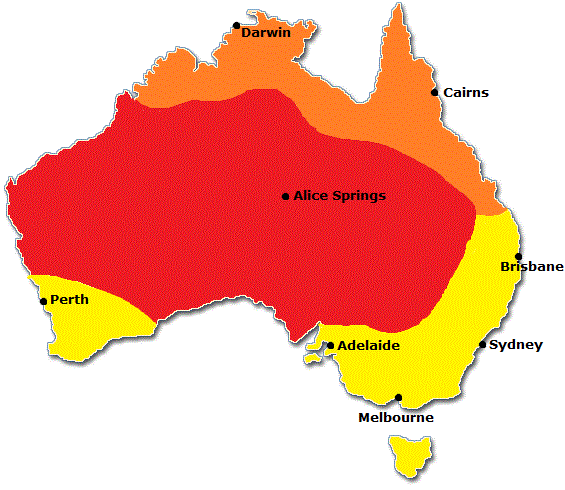
Big Cities and Southerly Coastal Areas: Warm to hot summers and mild winters. Go year round – winter is best for bushwalking; summer is best for beaches. Winter months will be cheaper for accommodation.
Central Australia (Red Centre): Desert, dry climate year round. Can get extremely hot in the summer months. Take extra precautions whenever travelling in the outback. Best time to visit is April – September.
The North: Tropical climate, hot year round with wet and dry seasons. Visit in the dry season (May-Oct), prices may be more expensive, but it will be less humid and there will be no tropical storms. Stinger (Jellyfish) season is November to May which makes swimming unsafe in these months.
Essential Packing Tips for Backpacking Australia
Packing for Australia requires special consideration due to the country’s diverse climates, strict biosecurity laws, and unique outdoor challenges. Here’s what every backpacker needs to know before heading Down Under…
Sun Protection (Critical!)
- Reef-safe sunscreen (SPF 50+): Regular sunscreen is banned near the Great Barrier Reef. Look for zinc oxide or titanium dioxide-based formulas.
- Wide-brimmed hat: Essential for the harsh Australian sun
- UV protection sunglasses: The sun reflects intensely off water and sand
- Long-sleeve UV shirt: For snorkelling, hiking, and beach days
Bug Protection & Outdoor Gear
- Fly nets for your head: Absolutely essential for the Outback and tropical regions
- Strong insect repellent (with DEET): For mosquitoes, sandflies, and march flies
- Head torch/flashlight: For camping and early morning activities
- Quick-dry towel: Perfect for beach hopping and hostel stays
Technology & Communication
- Australian travel SIM card: Buy on arrival at the airport (Telstra, Optus, or Vodafone)
- Power bank: Essential for long bus journeys and camping
- Universal power adaptor: Australia uses Type I plugs (three flat pins)
- Waterproof phone case: For water activities and beach days
Check out our extensive travel packing list for more.
Final Thoughts
Whether you choose the classic East Coast route from Sydney to Cairns, embark on the epic three-month journey across the entire continent, or forge your own path through the Red Centre, you’re about to discover why millions of backpackers call Australia their favourite travel experience. From swimming with whale sharks at Ningaloo Reef to watching the sunrise over Uluru, from surfing the legendary breaks of Byron Bay to exploring the ancient Aboriginal culture in Kakadu, every day will bring new adventures and unforgettable memories. Your Australian story starts the moment you book that flight, make it an epic one.



By adding us a preferred source you'll see Backpacker Advice more often in your Google searches.