






20 Unforgettable Things to Do in La Paz

La Paz completely blindsided me. I rolled into Bolivia’s de facto capital expecting a quick stopover, maybe a day or two before heading to the salt flats. Three weeks later, I was still there, and honestly, I could have stayed longer.
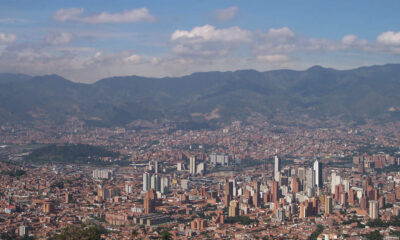
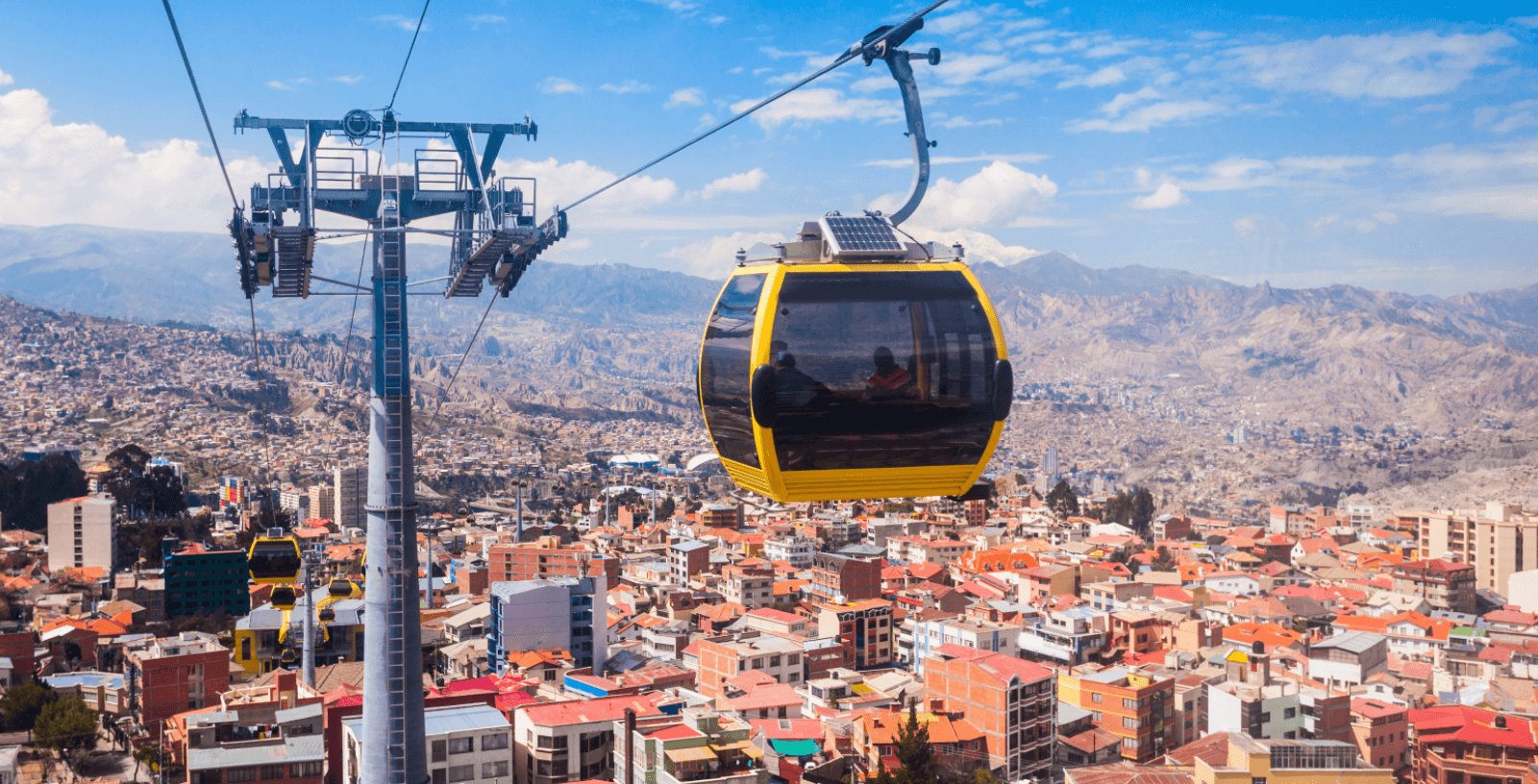
This city is absolutely mental in the best possible way. Perched at 3,640 metres above sea level, La Paz sprawls across a canyon with brick houses clinging to impossibly steep hillsides. Cable cars glide overhead like something from a sci-fi film, ancient cholitas sell dried llama foetuses in the markets, and backpackers swap stories about surviving Death Road over cheap beers in Sopocachi.
The altitude will knock you sideways for the first couple of days (trust me, take it easy), but once you acclimatise, La Paz reveals itself as one of South America‘s most fascinating and budget-friendly cities. Whether you’re an adrenaline junkie looking to conquer the world’s most dangerous road or a culture vulture keen to explore indigenous traditions, La Paz delivers.
I’ve put together this guide based on my own experiences and conversations with fellow backpackers in hostel common rooms. These are the activities that actually matter, the ones that’ll make your time in La Paz memorable without completely destroying your budget.
1. Cycle Down Death Road (Obviously)
Right, let’s get the big one out of the way first. Death Road is literally on every backpacker’s Bolivia bucket list, and for good reason. This 64-kilometre descent from La Cumbre to Yolosa takes you from freezing mountain passes down into the subtropical Yungas region, dropping over 3,500 metres in altitude.
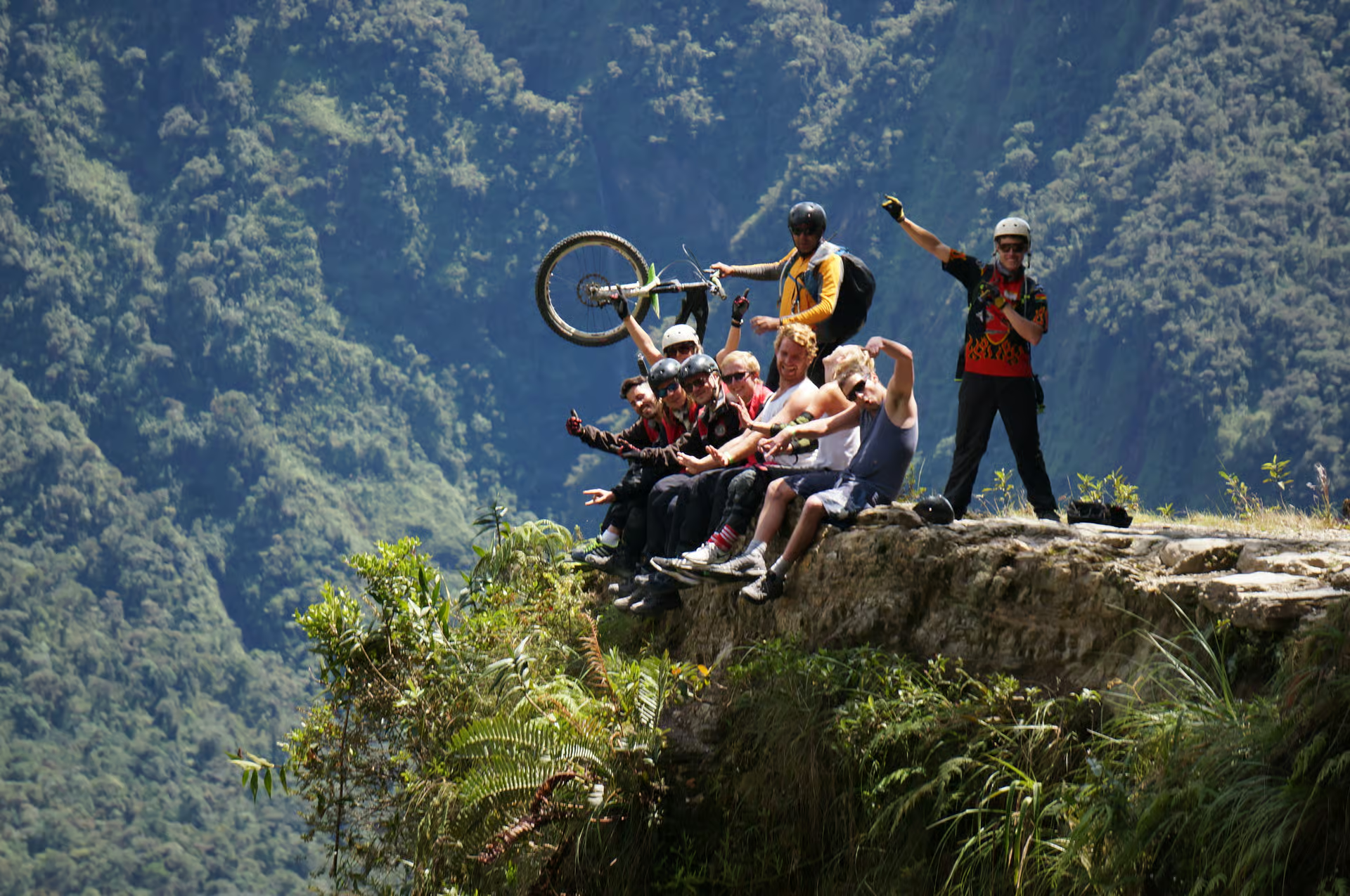
Yes, it’s called Death Road. No, you probably won’t die (though tourists have, so don’t be a muppet about it). The road earned its nickname back when buses and lorries regularly plunged off the edge into the abyss below. These days, there’s a newer, safer highway for vehicles, and Death Road is primarily used by tour groups.
I’ll be honest, I was bricking it beforehand. But the tour companies operating here are generally solid, with good quality bikes and experienced guides. I went with a reputable operator (around 600-700 bolivianos for the full day, including lunch, all equipment, and hotel pickup) and felt safe throughout.
The first section is tarmac and relatively tame, giving you time to get comfortable on the bike. Then you hit the gravel, and things get interesting. The road narrows, cliffs drop away to your right, and waterfalls spray across the path. It’s absolutely exhilarating. The key is to go at your own pace. The blokes in my group were racing down like lunatics, but I took it steady and still had an incredible time.
The tour wraps up at a hotel in Yolosa where you can shower, use the pool, and neck a well-deserved beer. Photos from the day are included (prepare for some properly dramatic shots), and you’ll be back in La Paz by evening.
Top tip: Book your tour directly with established companies rather than through your hostel. They often get better deals, and you’ll know you’re not getting the dodgy brakes special.
2. Take the Free Walking Tour (Do This First)
Look, I bang on about free walking tours in every city I visit, but they genuinely are brilliant. The Red Cap Walking Tour in La Paz costs 20 bolivianos (technically not free, but close enough) and is hands down the best way to get your bearings.
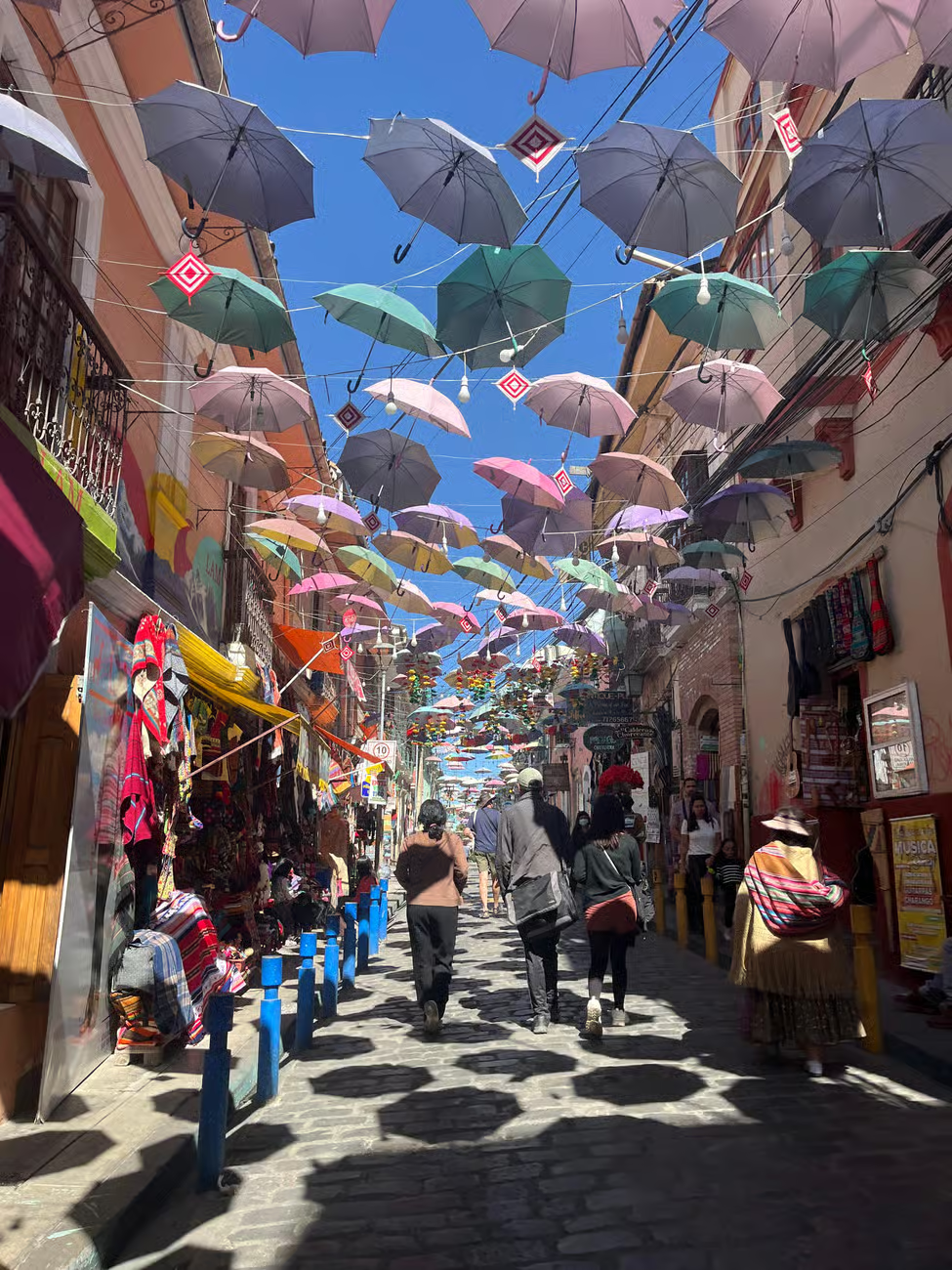
Tours leave from Plaza San Pedro at 10am and 2pm daily. The guides wear bright red caps and I Heart La Paz t-shirts, so you can’t miss them. Our guide, Rodrigo, was absolutely class and clearly loved his city.
The tour hits all the major spots including the witches market, San Francisco Church, Plaza Murillo, and Rodriguez Market. But the real value is in the stories and context Rodrigo provided. He explained the political history (La Paz has seen more coups than I’ve had hot dinners), pointed out safe areas versus sketchy ones, and gave us restaurant recommendations that actually panned out.
We finished at a traditional restaurant where most of the group stuck around for food and drinks. I ended up making mates with two Irish lads and a German girl, and we travelled together for the next month. That’s the other brilliant thing about these tours, they’re natural friend-makers.
Do this tour on your first full day in La Paz. It’ll orient you physically and culturally, and you’ll leave with a mental list of places to revisit.
3. Ride the World’s Highest Cable Car Network
La Paz has the most extensive urban cable car system on the planet, and riding it is genuinely one of the highlights of visiting. Locals use Mi Teleférico as public transport (the city sprawls up and down canyon walls where buses struggle), but for backpackers, it’s the best sightseeing tour you’ll find for three bolivianos.
The views are absolutely stunning. You glide silently above the terracotta rooftops, with snow-capped mountains dominating the horizon. The sheer scale of the city becomes apparent when you’re up there. Hundreds of thousands of people live on these impossible slopes.
My favourite route was taking the blue line from the city centre up to El Alto, then switching to the green line and riding it to the terminus. The whole journey takes about 20 minutes and dumps you in El Alto, which is technically a separate city but feels like an extension of La Paz.
El Alto has a bit of a dodgy reputation, especially after dark, but during the day it’s fine to have a wander. The architecture is wild, all gaudy Freddy Mamani buildings in electric colours. They’re called ‘cholets’ (a portmanteau of chalet and cholo) and look like something from a fever dream.
I grabbed a salteña (Bolivian empanada) from a street vendor for four bolivianos and watched the world go by for a bit before riding the cable car back down. The whole afternoon cost me about 15 bolivianos including the salteña.
Pro tip: Avoid rush hour (7am-9am and 5pm-7pm) unless you fancy being squashed in with commuters. Mid-morning or early afternoon is ideal.
4. Explore the Witches Market
The Mercado de las Brujas is properly bizarre and absolutely fascinating. Located on Calle Linares in the city centre, this market specialises in traditional Aymara remedies, potions, and ritual items.
The most striking thing is the dried llama foetuses hanging everywhere. Bolivians bury these under new building foundations as an offering to Pachamama (Mother Earth) for protection and good fortune. It’s deeply weird if you’re not used to it, but it’s also a window into indigenous traditions that predate the Spanish by centuries.
Beyond the llama foetuses, you’ll find all manner of herbs, dried frogs, soapstone carvings, and mysterious potions. The cholitas running the stalls are happy to explain what everything does, though a bit of Spanish helps enormously.
I bought a small bag of coca leaves (legal in Bolivia and brilliant for altitude sickness) for 10 bolivianos and a decorative skull made of plaster for 25 bolivianos. The latter now sits on my bookshelf at home and is an excellent conversation starter.
The witches market is included in most walking tours, but it’s worth returning independently. Go in the morning when it’s quieter and you can actually chat with the vendors. Just be respectful, some items and rituals are sacred, and snapping photos willy-nilly isn’t always appreciated. Ask first.
5. Meet Crazy Dave at San Pedro Prison
This one’s controversial, and I’ll explain why in a minute. But first, the background. San Pedro Prison in La Paz is infamous for its unique system. Prisoners buy their own cells (prices vary based on size and location within the prison), run businesses, and their families can live inside with them. It’s essentially a walled city within a city.
The prison became famous after the book Marching Powder was published, detailing British-Tanzanian drug smuggler Thomas McFadden’s experiences inside. Tours used to run inside the prison itself, but those were shut down years ago.
Enter Crazy Dave, an American bloke who spent 14 years locked up in San Pedro for drug trafficking. Now he runs informal tours outside the prison, meeting tourists in Plaza San Pedro every day at 1pm.
Dave’s stories are absolutely wild. He talks about drug production inside the prison, the economics of buying cells, how he survived as a gringo, and the general insanity of daily life. He’s a talented storyteller and his tales are gripping, if occasionally hard to believe.
Here’s the controversial bit: Dave is homeless and does these tours as his income. He has to pay bribes to police to operate. Some people think he’s exploiting his criminal past for profit. Others see him as a survivor making the best of a difficult situation.
I went, I listened, I tipped him 50 bolivianos. My take is that Dave’s stories are valuable oral history, even if his past is dodgy. Make your own judgement.
The tour lasts about 90 minutes, costs nothing upfront (it’s tip-based), and Dave will find you if you hang around Plaza San Pedro at 1pm. Just rock up.
6. Day Trip to Lake Titicaca
Lake Titicaca straddles the Bolivia-Peru border and is the highest navigable lake in the world. It’s also absolutely gorgeous, with incredibly blue water and island communities that have maintained traditional lifestyles for centuries.
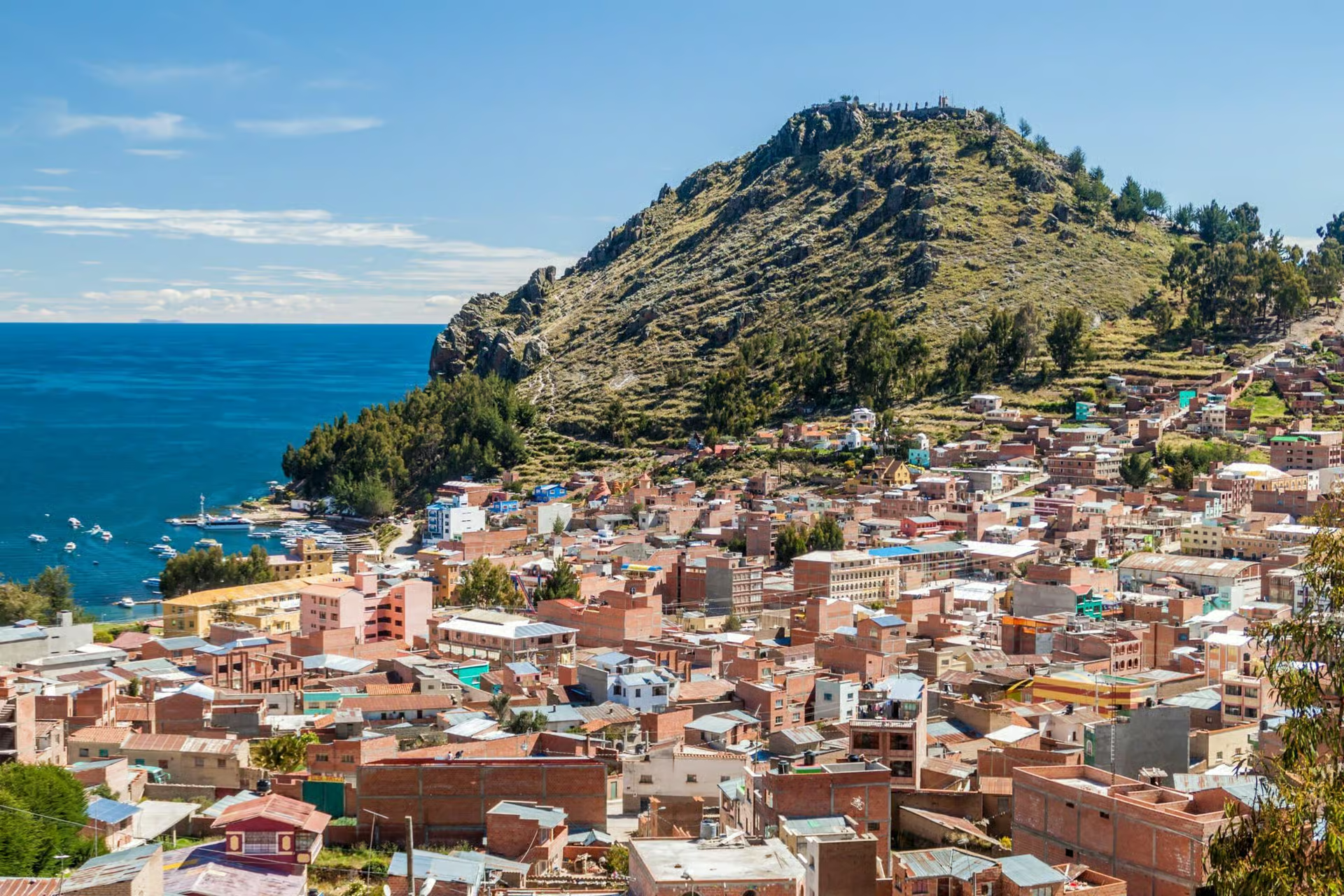
Most backpackers do Titicaca from the Peruvian side (Puno), but the Bolivian side from La Paz is equally spectacular and generally cheaper. Day tours run about 250-300 bolivianos and include transport, a boat trip, and lunch.
The tours typically visit Copacabana (Bolivia’s main lakeside town, not the famous beach in Rio), then take a boat out to Isla del Sol (Sun Island). According to Inca mythology, the sun god was born here, making it a sacred site.
Sun Island has Inca ruins, traditional villages, and hiking trails with stunning lake views. The Island also has no cars, which gives it a properly peaceful vibe. I spent about three hours wandering around, chatting with locals, and eating fresh trout at a family-run restaurant.
Some backpackers overnight in Copacabana to catch the sunset and sunrise over the lake. It’s worth considering if you have the time. Hostels there are cheap (50-70 bolivianos for a dorm bed) and the town has a lovely, chilled atmosphere.
Top tip: Bring sunscreen and a hat. The altitude combined with reflection off the water means you’ll burn faster than you think.
How To Travel South America Without Flying
7. Sample Street Food at Rodriguez Market
Right, forget fancy restaurants. If you want to eat like a local and keep your budget intact, Rodriguez Market is where it’s at. This covered market in the city centre is heaving with food stalls serving traditional Bolivian grub for pocket change.
My go-to breakfast was api con pastel. Api is a warm drink made from purple corn, cinnamon, and cloves (sounds weird, tastes incredible), and pastel is a fried cheese pastry. The combination costs about eight bolivianos and will fuel you for hours.
For lunch, get a full almuerzo (set meal) for 12-15 bolivianos. You typically get soup, a main with rice and meat, and sometimes a drink. The quality varies by stall, but I found success by following the crowds. If there’s a queue of locals, the food’s probably decent.
Salteñas are everywhere in La Paz, and Rodriguez Market has some of the best. These are like empanadas but with a slightly sweet pastry and a liquid filling (chicken, beef, or vegetarian). They cost about five bolivianos each and make a perfect on-the-go breakfast.
Be warned, hygiene standards aren’t exactly Michelin-star level. I had no problems, but I’ve also got an iron stomach from years of travel. If you’re prone to dodgy guts, perhaps stick to busier stalls with higher turnover.
8. Hike in Chacaltaya or the Moon Valley
La Paz is surrounded by mountains, and getting out of the city for a day hike is absolutely worth it. Two popular options are Chacaltaya and the Valley of the Moon.
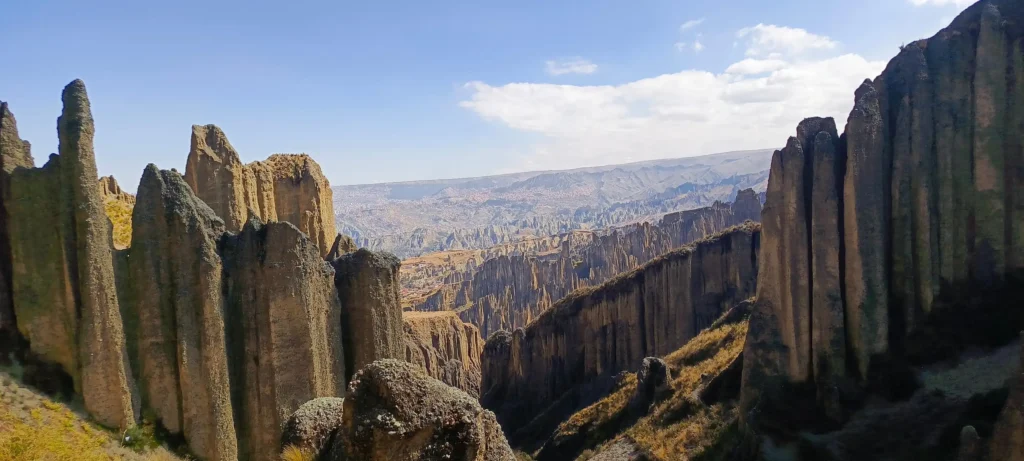
Chacaltaya is about 30 kilometres north of La Paz and used to have the world’s highest ski resort (now closed due to glacial melt). The mountain itself tops out at 5,421 metres, making it one of the easier 5,000-plus metre peaks to summit. Tours cost around 150-200 bolivianos including transport and a guide.
The hike takes about two hours round trip and isn’t technically difficult, but the altitude will absolutely hammer you. I was gasping like I’d run a marathon, and I was reasonably fit at the time. The views from the top are spectacular though, with Lake Titicaca visible on clear days.
The Valley of the Moon (Valle de la Luna) is closer to the city and far less strenuous. This bizarre geological formation of clay and sandstone spires looks properly otherworldly. Neil Armstrong supposedly said it resembled the moon’s surface, hence the name.
Entry costs 15 bolivianos, and you can easily reach it by micro (local bus) for a couple of bolivianos. There are two walking trails, and I’d recommend Devil’s Maw viewpoint for the best photo ops. The whole visit takes about 90 minutes.
Combine Chacaltaya and Moon Valley in one day if you’re keen. Tours that hit both typically cost 200-250 bolivianos.
9. Drink Your Way Through Sopocachi
Sopocachi is La Paz’s trendy neighbourhood, full of cafes, bars, and restaurants catering to students and middle-class locals. It’s also where most backpackers end up on a night out.
Start at Diesel Nacional, a steampunk-themed cocktail bar on Avenida 20 de Octubre. The decor is bonkers (think exposed pipes, antique machinery, and dim lighting) and the cocktails are strong. Expect to pay 30-40 bolivianos for a drink, which is pricey for Bolivia but reasonable by any other standard.
From there, wander down to Calle Jauregui where you’ll find a cluster of bars. Mongo’s is popular with backpackers, with cheap beer (10-15 bolivianos) and usually a decent crowd. I ended up here most nights, playing pool and chatting rubbish with travellers from all over.
For late-night shenanigans, head to Gold Classics on Avenida Montenegro. This club plays 80s and 90s bangers and stays open until 4am or 5am. Entry is usually 20-30 bolivianos, and drinks are reasonably priced. It gets absolutely rammed on weekends.
Wild Rover is the main backpacker hostel in La Paz, and their bar is legendary. Even if you’re not staying there, you’re welcome to drink at their bar. They do happy hour specials, beer pong tournaments, and usually have a party vibe going.
A big night out in Sopocachi will set you back 150-250 bolivianos depending on how hard you go. That’s about 15-25 quid, which is proper cheap compared to most places.
10. Visit Tiwanaku Archaeological Site
Tiwanaku is a pre-Incan archaeological site about 70 kilometres west of La Paz, near the Peruvian border. It was the capital of a powerful empire that dominated the region from around 400 to 900 AD, predating the Incas by several centuries.
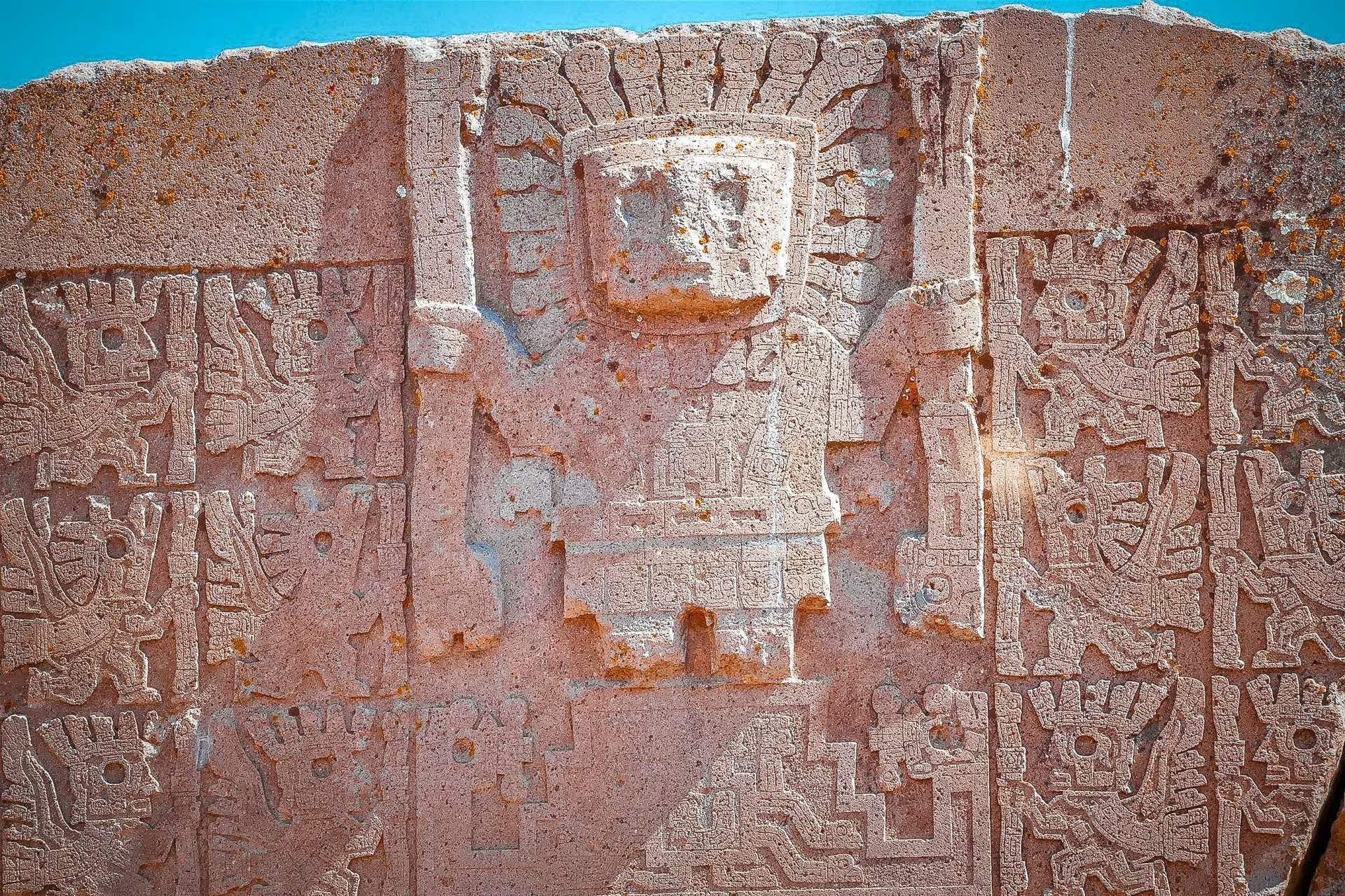
The site isn’t as visually impressive as Machu Picchu or other famous South American ruins, but it’s historically significant and the museums here are excellent. The main structures include the Akapana Pyramid, the Kalasasaya Temple, and the famous Gate of the Sun.
Most backpackers visit on a half-day tour (around 200-250 bolivianos including transport and a guide). Entry to the site costs an additional 100 bolivianos for foreigners. I know, it’s steep, but the guide really does make it worthwhile. Without context, the ruins are just piles of rocks.
Our guide explained the astronomical significance of the structures, the theory that Tiwanaku had advanced engineering knowledge, and the culture’s influence on later Andean civilisations. Fascinating stuff, even if some of the claims are a bit speculative.
The museums contain ceramics, textiles, and stonework that survived the Spanish conquest. Photography isn’t allowed inside, which annoyed me at the time but probably protects the artefacts.
Pack snacks and water. There’s not much available on site, and you’ll be there for three or four hours.
11. Try Ice Climbing on Huayna Potosi Glacier
For something properly adventurous, consider ice climbing on the Huayna Potosi glacier. This isn’t your typical tourist activity, it’s a full-day commitment that requires physical fitness and a decent head for heights.
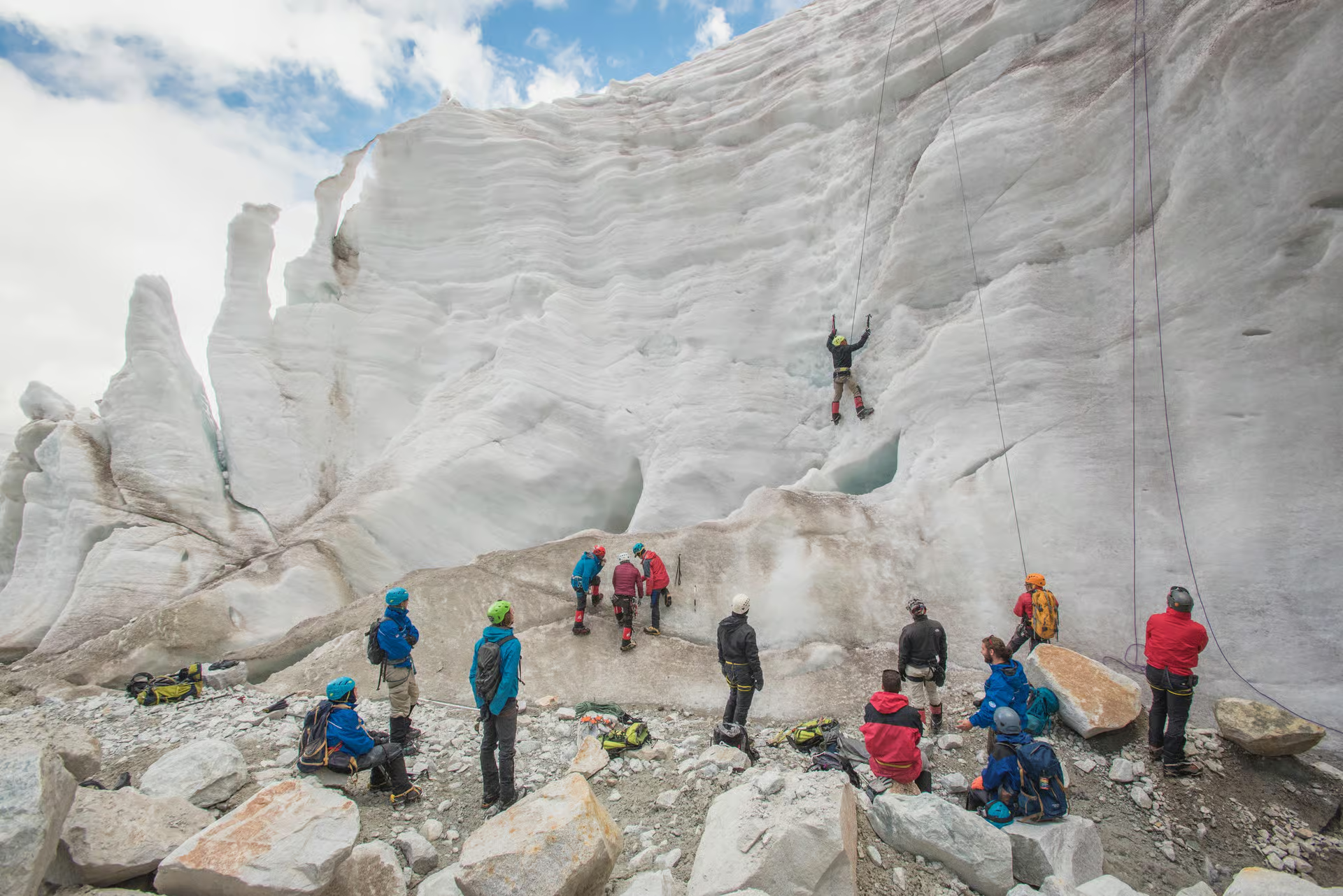
Tours pick you up early (around 7am) and drive you to the glacier, about 90 minutes from La Paz. After lunch at base camp, you’re kitted out with crampons, ice axes, harnesses, and helmets. Then it’s a short hike to the lower glacier where your guide demonstrates the basics.
Ice climbing is absolutely knackering. You’re hacking away at vertical ice, trying to find purchase for your crampons, while your forearms scream in protest. But it’s also incredible. The glacier is stunning, the challenge is real, and the sense of accomplishment when you complete a route is brilliant.
Tours cost around 550-650 bolivianos including all equipment, transport, lunch, and instruction. It’s more expensive than most activities in La Paz, but it’s also a once-in-a-lifetime kind of thing.
I won’t lie, the altitude makes everything harder. You’re above 5,000 metres here, and even tying your boots leaves you breathless. If you’re not acclimatised, this will be brutal. Make sure you’ve been in La Paz for at least a few days before attempting this.
12. Eat at a Cholita Restaurant in El Alto
The cholitas (indigenous Aymara women in traditional dress) run some excellent restaurants in El Alto, and eating at one is a great cultural experience. These aren’t fancy establishments, they’re simple, family-run places serving authentic Bolivian food.
I went to a place near the 16 de Julio market (on Thursdays and Sundays) and had fricasé, a traditional pork stew with hominy, potatoes, and a rich, spicy sauce. It cost 20 bolivianos and came with a massive portion that I couldn’t finish.
The cholitas who run these restaurants are lovely. Our host chatted to us (my Spanish is dodgy at best, but we managed) and seemed genuinely pleased that tourists were eating there. She explained the ingredients and the cooking process, and insisted we try her homemade ají (hot sauce), which was properly fiery.
Finding these restaurants takes a bit of effort. They’re not on TripAdvisor or Google Maps. The best approach is to ask locals or your hostel staff for recommendations. Alternatively, wander around the markets and look for places packed with locals.
Don’t expect English menus or pristine toilets. Do expect generous portions, authentic flavours, and prices that make you wonder how they stay in business.
13. Take a Cooking Class
If you enjoyed eating Bolivian food, why not learn to make it? Several companies in La Paz offer cooking classes where you prepare traditional dishes with a local chef.
I did a three-hour class that cost 180 bolivianos and covered salteñas, anticuchos (grilled meat skewers), and api (the purple corn drink). We started at the market, buying ingredients and learning about local produce. Then we headed to the chef’s kitchen and got stuck in.
Making salteñas is surprisingly fiddly. The dough needs to be just right, and sealing the edges without spilling the liquid filling takes practice. Mine looked dodgy as hell, but they tasted brilliant.
The best part of the class was sitting down at the end to eat everything we’d made, accompanied by singani (Bolivian grape spirit) cocktails. Our chef told stories about Bolivian food traditions and answered all our questions about ingredients we’d never seen before.
If you’re on a tight budget, cooking classes might seem extravagant. But consider this: you’re getting lunch, learning skills you can use back home, and supporting a local business. For 180 bolivianos, I reckon that’s fair value.
14. See Cholitas Wrestling
Cholitas wrestling is exactly what it sounds like: indigenous women in traditional dress competing in theatrical wrestling matches. It’s camp, it’s colourful, and it’s great fun.
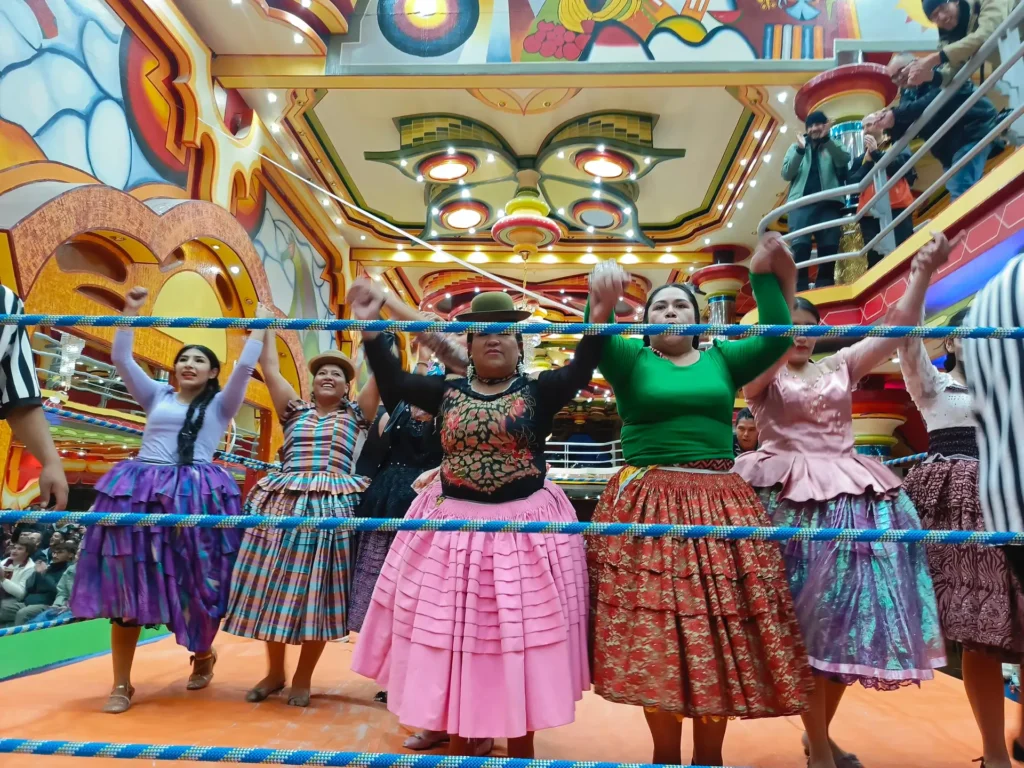
Shows happen every Sunday in El Alto, with doors opening around 3pm. Entry costs about 50-80 bolivianos depending on your seat (ringside is more expensive). Tours from La Paz including transport cost around 150 bolivianos.
The wrestling itself is pure theatre. There are goodies and baddies, dramatic storylines, and over-the-top moves. The cholitas play it completely straight though, and the crowd (mostly local families) absolutely loves it.
What makes it interesting is the cultural context. The term ‘cholita’ was historically derogatory, used to demean indigenous women. But in recent years, these women have reclaimed the word and turned it into a symbol of pride and empowerment. The wrestling is part of that movement.
After the show, you can take photos with the wrestlers for tips. I paid 20 bolivianos for a photo and a quick chat. The wrestler I spoke to said she’d been competing for eight years and loved the physical challenge and the sense of community.
It’s worth noting that El Alto after dark isn’t the safest place for tourists. If you’re going independently, leave before it gets dark or take a taxi back to La Paz.
15. Hang Out in Plaza San Francisco
Sometimes the best thing to do in a city is absolutely nothing. Plaza San Francisco in central La Paz is perfect for people-watching and soaking up the atmosphere.
The plaza sits in front of the stunning San Francisco Church, which dates back to the 16th century. The church is worth a quick visit (entry is 10 bolivianos), but the real action is outside.
The plaza is always busy with street vendors selling everything from fresh juice to bootleg DVDs, performers doing tricks for tips, and locals just hanging out. Grab a bench, buy a bag of sunflower seeds from a passing vendor (three bolivianos), and watch the world go by.
I spent a lot of time in this plaza, often nursing a hangover and contemplating my life choices. It’s also a good meeting point if you’re coordinating with other travellers. Everyone ends up here eventually.
If you fancy a drink with a view, head to Cafe Bunuel on the plaza’s north side. It’s touristy and slightly overpriced (20 bolivianos for a coffee), but the balcony overlooks the plaza and the surrounding mountains. It’s a nice spot for planning your next move or writing postcards (yes, I still do that).
16. Shop at the 16 de Julio Market
If you’re in La Paz on a Thursday or Sunday, don’t miss the 16 de Julio market in El Alto. This is one of the largest open-air markets in South America, stretching for kilometres and selling absolutely everything.
You can find electronics, clothes, household goods, livestock, traditional textiles, fake designer gear, and questionable DVDs. The market is chaotic and overwhelming, but it’s also brilliant fun if you embrace the madness.
I went looking for a cheap jumper (La Paz gets cold at night) and ended up buying an alpaca wool sweater for 80 bolivianos. It’s warm as hell and has lasted years. I also picked up some coca leaves and a woven bag for about 30 bolivianos total.
Bargaining is expected here. Start at about 60 per cent of the asking price and work from there. Don’t be aggressive about it though, these folks are making a living and most prices are already very reasonable.
The street food at this market is excellent. I had anticuchos (grilled meat skewers) for 10 bolivianos and they were some of the best I’d had in Bolivia. Follow the crowds to find the good stuff.
10 Reasons To Go To South America
Watch your belongings. The market is generally safe, but pickpockets operate in busy areas. Keep your bag in front of you and don’t flash expensive cameras or phones.
17. Visit the Coca Museum
The Coca Museum is a small, independent museum in central La Paz dedicated to the coca plant and its cultural significance. Entry costs 10 bolivianos and it takes about an hour to see everything.
Coca leaves have been used in the Andes for thousands of years for their medicinal properties and cultural importance. They’re chewed to combat altitude sickness, brewed into tea, and used in religious ceremonies. The museum explains all of this, along with the plant’s transformation into cocaine and the resulting war on drugs.
The tone is unapologetically pro-coca. The exhibits argue (fairly convincingly) that coca and cocaine are very different things, and that criminalising coca has harmed Andean communities while doing nothing to stop the cocaine trade.
Whether you agree with that argument or not, the museum is informative and thought-provoking. It’s also a nice break from hiking and adrenaline activities if you fancy something more contemplative.
After visiting, I felt much better about drinking coca tea and chewing coca leaves (both of which are brilliant for altitude sickness). The leaves themselves are mildly stimulating, like strong coffee, and nowhere near as intense as actual cocaine.
18. Experience a Peña (Traditional Music Venue)
Peñas are venues where you can experience traditional Andean music and dance. Several operate in La Paz, and while they’re partly aimed at tourists, they’re still great fun.
I went to Peña Huari, one of the most established venues. Entry was 50 bolivianos including a welcome drink. The show started around 8pm and lasted about two hours, featuring musicians playing pan pipes, charangos (small Andean guitars), and drums, along with dancers in traditional costumes.
The music is quite different from what you’d hear in a Western club. It’s melodic and rhythmic, with a lot of repetition. Some songs are upbeat and dancey, others are slower and more contemplative. By the end, audience members were being pulled up to dance, which was properly entertaining.
Most peñas serve food as well. I had a set menu of quinoa soup and llama steak for about 60 bolivianos. The llama was surprisingly good, lean and flavourful, not gamey at all.
If you want a more authentic experience, ask locals where they go. There are smaller, less touristy peñas in residential neighbourhoods that charge less and have a more genuine vibe. You might feel a bit out of place as the only foreigner, but people are generally welcoming.
19. Day Trip to Coroico
Coroico is a small town in the Yungas region, about three hours from La Paz. It sits at a much lower altitude (about 1,700 metres) and has a subtropical climate, making it a popular escape for paceños (La Paz locals) looking for warmer weather.
The journey itself is spectacular, winding down from the altiplano through cloud forest into the valleys. If you’re doing Death Road, you’ll pass near Coroico on the way down.
The town is tiny and there’s not a huge amount to do, but that’s kind of the point. It’s a place to chill out, enjoy the warm weather, and recover from the altitude. There are a few waterfalls and hikes in the surrounding area if you fancy some gentle exercise.
I stayed overnight in Coroico at a hostel called El Cafetal (70 bolivianos for a dorm bed) which had a swimming pool and hammocks with mountain views. Proper relaxing.
Coroico is also a coffee-growing region, and several plantations offer tours. I did one that cost 50 bolivianos and included a walk through the plantation, an explanation of the coffee-making process, and samples of the final product. The coffee was excellent, and I bought a bag to take away for 40 bolivianos.
Transport to Coroico from La Paz is easy. Minibuses leave from the Villa Fatima area throughout the day and cost about 20-30 bolivianos one way.
20. Just Wander and Get Lost
Here’s my final piece of advice: don’t over-plan La Paz. Some of my best experiences came from wandering aimlessly, following my nose, and seeing where I ended up.
One afternoon, I stumbled into a festival in a residential neighbourhood. There were traditional dancers, street food stalls, and locals drinking beer and dancing. Nobody spoke English, my Spanish was rubbish, but people were friendly and welcoming. I ended up dancing badly and drinking too much, and it was brilliant.
Another time, I followed the smell of grilling meat and found a tiny restaurant down an alley. The owner didn’t have a menu, she just told me what was available that day (chicken or pork, basically). I had the chicken, served with rice, salad, and ají sauce, for 15 bolivianos. It was some of the best food I ate in La Paz.
La Paz rewards curiosity. The city can feel overwhelming and chaotic, but if you lean into that rather than fighting it, you’ll have a much better time. Get lost, try random street food, chat to locals, and see what happens.
Obviously, use common sense. Don’t wander into dodgy areas late at night, don’t flash expensive gear, and trust your instincts. But within those boundaries, be open to serendipity.
Practical Information
Getting to La Paz: Most backpackers arrive by bus from Peru, Chile, or other Bolivian cities. The main bus terminal is in the city centre and is well connected to hostels by taxi (15-25 bolivianos). If you’re flying, El Alto airport is about 30 minutes from the city centre. Taxis cost 50-80 bolivianos, or you can take a trufi (shared minibus) for about 5 bolivianos.
Accommodation: Dorm beds in budget hostels cost 40-70 bolivianos per night. Popular options include Wild Rover (party hostel), Adventure Brew Hostel (good for meeting people), and Loki La Paz (large hostel with excellent facilities). Private rooms in budget hotels start around 120-150 bolivianos.
Staying In Hostels While Travelling: Advice and Survival Tips
Food and Drink: Budget 60-100 bolivianos per day for food if you’re eating at markets and cheap restaurants. Add another 50-80 bolivianos if you’re drinking. A meal at a mid-range restaurant costs 40-80 bolivianos.
Getting Around: Micros (local buses) cost 2-3 bolivianos per journey. Cable cars cost 3 bolivianos. Taxis are cheap, usually 10-20 bolivianos for trips within the city centre. Always agree on the fare before getting in.
Altitude Sickness: La Paz sits at 3,640 metres. You will probably feel some effects of the altitude, including shortness of breath, headaches, and fatigue. Take it easy for the first few days. Drink lots of water, avoid alcohol initially, and consider coca tea. If symptoms are severe, descend to a lower altitude.
Safety: La Paz is generally safe for tourists, but petty theft does happen. Don’t carry large amounts of cash, keep your valuables secure, and be cautious in crowded areas. Certain neighbourhoods (parts of El Alto, some hillside areas) are sketchy after dark. Stick to well-lit, busier streets at night.
Travel Safety and Security Tips
Money: Bolivia uses the boliviano (BOB). ATMs are widely available and most accept foreign cards, though fees can be high (around 25-30 bolivianos per withdrawal). Many places accept US dollars, but you’ll get a poor exchange rate. Bring cash to pay for most things, card acceptance is limited outside of upscale establishments.
SIM Cards: I tend to use eSIMs when travelling these day, however local SIM cards are cheap and easy to buy. The main providers are Entel, Tigo, and Viva. A SIM with data costs around 50-80 bolivianos. Coverage in La Paz is good, though it can be patchy once you leave the city.
Border Crossing Experiences and Procedures in Bolivia
Final Thoughts
La Paz is mental. It’s chaotic, exhausting, and occasionally frustrating. It’s also one of the most interesting cities I’ve visited in South America.
The altitude will absolutely batter you for the first few days. Accept this, slow down, and drink lots of coca tea. Once you acclimatise, you’ll have the energy to explore properly.
The city rewards adventurous travellers. If you’re happy to eat street food, navigate Spanish-speaking markets, and embrace a bit of chaos, you’ll have an incredible time. If you need things to be easy and comfortable, you might struggle.
Budget-wise, La Paz is brilliant. You can have a big night out for 20 quid, eat yourself silly for a fiver, and see world-class sights for pocket change. Even expensive activities like Death Road are reasonable compared to similar experiences elsewhere.
Give La Paz at least a week if you can. The city has layers that only reveal themselves if you stick around. Beyond the obvious tourist attractions, there’s a fascinating indigenous culture, a complicated political history, and a resilient local population that’s weathered centuries of upheaval.
Right, that’s everything I’ve got. Now go book that flight to La Paz and have an absolute belter of a trip. Just remember to pack warm clothes, it’s freezing at night.
Buen viaje!



By adding us a preferred source you'll see Backpacker Advice more often in your Google searches.